

The Mind-Body Connection: How Your Thoughts Directly Impact Your Physical Health

The ancient wisdom “as above, so below” takes on profound meaning when we explore the intricate relationship between our mental and physical states. The mind-body connection isn’t just a philosophical concept—it’s a scientifically proven reality that can transform how we approach health and healing.

Understanding the Science Behind Mind-Body Medicine

Your thoughts, emotions, and beliefs create measurable changes in your body’s chemistry. When you experience stress, anxiety, or negative emotions, your brain releases cortisol and adrenaline, triggering inflammation and compromising your immune system. Conversely, positive thoughts and emotions flood your system with beneficial hormones like serotonin, dopamine, and oxytocin, promoting healing and vitality.

Research from Harvard Medical School demonstrates that chronic stress can literally rewire your brain, affecting memory, decision-making, and emotional regulation. Meanwhile, practices like meditation and mindfulness create positive neuroplasticity, strengthening neural pathways associated with calm, focus, and resilience.

The Physical Manifestations of Mental States

Your body serves as a mirror for your inner world. Persistent worry often manifests as digestive issues, tension headaches, or insomnia. Suppressed anger may appear as inflammation, autoimmune conditions, or chronic pain. Fear and anxiety frequently show up as respiratory problems, heart palpitations, or muscle tension.

This isn’t to suggest that all physical ailments stem from mental causes, but rather to recognize the powerful influence our psychological state has on our physical well-being. Traditional Chinese Medicine and Ayurveda have understood this connection for millennia, treating the person as a whole rather than isolated symptoms.

Practical Ways to Harness Your Mind-Body Connection

Daily Mindfulness Practice Begin each day with five minutes of conscious breathing. This simple practice activates your parasympathetic nervous system, reducing stress hormones and promoting healing. Focus on deep, slow breaths, allowing your belly to expand with each inhale.

Emotional Awareness and Processing Create space to acknowledge and process your emotions rather than suppressing them. Journaling, meditation, or speaking with a trusted friend can prevent emotional energy from becoming trapped in your physical body.

Positive Visualization Spend time each day visualizing your body in perfect health. See your immune system strong and vibrant, your organs functioning optimally, and your energy flowing freely. Your subconscious mind doesn’t distinguish between vividly imagined experiences and reality, making visualization a powerful healing tool.

Gratitude Practice Cultivate genuine appreciation for your body and its incredible capabilities. Thank your heart for beating, your lungs for breathing, and your immune system for protecting you. This practice shifts your energy from criticism to celebration, promoting healing at the cellular level.

Movement as Medicine Choose physical activities that bring you joy rather than punishment. Whether it’s dancing, walking in nature, or gentle yoga, movement that feels good creates positive associations in your nervous system, enhancing both mental and physical well-being.

The Role of Belief in Healing

Your beliefs about your health significantly impact your healing capacity. The placebo effect demonstrates that believing in recovery can trigger real physiological changes, even without active treatment. Conversely, nocebo effects show how negative expectations can worsen symptoms or create new ones.

Examine your health beliefs honestly. Do you see your body as fragile or resilient? Do you believe in your capacity to heal, or do you feel powerless over your health? Shifting limiting beliefs to empowering ones can dramatically accelerate your healing journey.

Creating a Holistic Healing Environment

Your external environment influences your internal state. Surround yourself with beauty, whether through plants, art, music, or natural light. These elements signal safety to your nervous system, promoting relaxation and healing.

Equally important is your social environment. Supportive relationships boost immune function, while toxic relationships create chronic stress. Prioritize connections that nourish your soul and set boundaries with those that drain your energy.

Integrating Mind-Body Practices into Daily Life

Start small and build consistency. Choose one practice that resonates with you—perhaps morning meditation, evening gratitude, or midday breathing exercises. As this becomes habit, gradually add other elements.

Remember that healing isn’t linear. Your body may need time to release old patterns and integrate new ones. Be patient and compassionate with yourself throughout this process.

The Future of Holistic Health

As conventional medicine increasingly recognizes the mind-body connection, we’re seeing exciting developments in integrative care. Hospitals now offer meditation programs, doctors prescribe nature therapy, and research validates ancient healing practices.

This shift represents a return to treating humans as complete beings rather than collections of symptoms. By embracing the mind-body connection in your own life, you become part of this healing revolution.

Your thoughts are powerful medicine. Use them wisely, and watch as your entire being transforms from the inside out. The journey to optimal health begins not just with what you put in your body, but with what you allow in your mind.


For deeper insights into transforming your relationship with health and wellness through mindful practices, explore “The Path to Wellness: A Journey of Self-Discovery and Healing” – a comprehensive guide to creating lasting change in your well-being journey.


Top Movie Recommendations for Holistic Wellness

Movies can be a great source of inspiration and relaxation, especially when they focus on themes of holistic wellness. Here are some top movie recommendations that promote a balanced and healthy lifestyle.

1. Eat Pray Love (2010)**

Based on the memoir by Elizabeth Gilbert, this movie follows the journey of a woman who travels the world in search of self-discovery and healing. It explores themes of mindfulness, meditation, and the importance of finding balance in life. Watch Eat Pray Love on Amazon.

2. The Secret (2006)**

This documentary delves into the Law of Attraction and how positive thinking can transform your life. It features insights from various experts on how to manifest your desires and achieve holistic wellness. Watch The Secret on Netflix.

3. Heal (2017)**

Heal is a documentary that explores the connection between the mind and body and how our thoughts, beliefs, and emotions impact our health. It features interviews with leading scientists, spiritual teachers, and people with chronic illnesses. Watch Heal on Amazon.

4. The Peaceful Warrior (2006)**

Based on Dan Millman’s novel “Way of the Peaceful Warrior,” this movie tells the story of a young gymnast who learns about the importance of mindfulness, inner peace, and living in the present moment. Watch The Peaceful Warrior on Amazon.

5. Minimalism: A Documentary About the Important Things (2015)**

This documentary explores the benefits of living with less and how minimalism can lead to a more fulfilling and stress-free life. It features interviews with minimalists from all walks of life. Watch Minimalism on Netflix.

Call to Action

Set aside some time to watch these inspiring movies and explore the themes of holistic wellness. Visit Holistic Wellness Guide for more tips and insights on leading a balanced and healthy lifestyle.

How to Start Walking: Small Habits to Build a Healthy Routine

Walking is one of the simplest and most effective ways to improve your overall health and well-being. Incorporating small walking habits into your daily routine can lead to significant benefits. Here’s a guide to help you start walking and make it an enjoyable part of your life.

1. Set Realistic Goals

Start with achievable goals, such as walking for 10-15 minutes a day. Gradually increase your walking time as you become more comfortable. Setting small, realistic goals helps build consistency and confidence.

2. Find a Walking Buddy

Walking with a friend or family member can make the activity more enjoyable and motivating. Having a walking buddy provides accountability and an opportunity to socialize while getting exercise.

3. Choose the Right Time

Identify the best time of day for your walks. Some people prefer morning walks to start their day with energy, while others enjoy evening walks to unwind. Consistency is key, so choose a time that fits your schedule.

4. Wear Comfortable Shoes

Invest in a good pair of walking shoes that provide support and comfort. Proper footwear can prevent injuries and make your walking experience more enjoyable.

5. Use Walking as a Social Activity

Combine walking with social activities, such as catching up with friends or making phone calls. Talking to someone while walking can make the time pass quickly and make the activity more enjoyable.

6. Enjoy Nature

Take advantage of nearby parks, trails, or beaches. Walking in nature can be soothing and invigorating. Enjoy the scenery, listen to the birds, and appreciate the beauty around you.

7. Listen to Music or Podcasts

Create a playlist of your favorite songs or listen to interesting podcasts to keep yourself entertained while walking. Music and podcasts can provide a distraction and make your walks more enjoyable.

8. Track Your Progress

Use a pedometer or a smartphone app to track your steps and progress. Seeing your improvement over time can be motivating and encourage you to keep going.

9. Reward Yourself

Set milestones and reward yourself when you reach them. Whether it’s a small treat, a new book, or a relaxing bath, rewarding yourself can keep you motivated.

10. Incorporate Walking into Daily Activities

Find ways to incorporate walking into your daily routine. Park farther from your destination, take the stairs instead of the elevator, or walk during your lunch break. These small changes can add up to significant benefits.

Call to Action

Start incorporating these small walking habits into your daily routine to improve your health and well-being. Visit Holistic Wellness Guide for more tips and insights on leading a healthy lifestyle.

Start Your Meditation Journey: A Comprehensive Guide

Meditation is a powerful practice that can help reduce stress, enhance focus, and improve overall well-being. Here’s a detailed guide to help you start your meditation journey.

Understanding Meditation

Meditation is a practice where an individual uses techniques such as mindfulness or focusing the mind on a particular object, thought, or activity to train attention and awareness, and achieve a mentally clear and emotionally calm state.

Benefits of Meditation

  1. Reduces Stress: Meditation helps manage stress by lowering the levels of cortisol, the stress hormone, in the body.
  2. Enhances Focus: Regular meditation improves concentration and attention span.
  3. Improves Emotional Health: Meditation can lead to improved self-image and a more positive outlook on life.
  4. Promotes Sleep: Practicing meditation can help control the runaway thoughts that can interfere with sleep.

Getting Started with Meditation

1. Create a Comfortable Space

Find a quiet place where you won’t be disturbed. Set up a comfortable cushion or chair, and consider adding calming elements like candles, plants, or soft lighting.

2. Choose a Time

Select a time of day that works best for you. Many people find that meditating first thing in the morning or before bed helps to create a routine.

3. Start with Short Sessions

Begin with just a few minutes each day and gradually increase the duration as you become more comfortable with the practice.

4. Focus on Your Breath

One of the simplest ways to start meditating is to focus on your breath. Close your eyes and take slow, deep breaths, paying attention to the sensation of the air entering and leaving your body.

5. Use Guided Meditations

Guided meditations can be particularly helpful for beginners. There are many apps and online resources that offer free guided meditation sessions.

Meditation Techniques

1. Mindfulness Meditation

This technique involves being fully present in the moment. Focus on your breath, bodily sensations, and thoughts, acknowledging them without judgment.

2. Loving-Kindness Meditation

Also known as Metta meditation, this practice involves directing positive energy and thoughts towards yourself and others. Start by wishing yourself well and then extend those wishes to loved ones, acquaintances, and even those with whom you have conflicts.

3. Body Scan Meditation

In this practice, you systematically focus on different parts of your body, starting from your toes and working your way up to your head. This helps promote relaxation and awareness of bodily sensations.

4. Mantra Meditation

This involves repeating a word or phrase (mantra) to help focus the mind. The mantra can be spoken aloud or silently in your mind.

Overcoming Common Challenges

1. Wandering Mind

It’s normal for your mind to wander during meditation. When it happens, gently bring your focus back to your breath or chosen point of focus.

2. Physical Discomfort

Find a comfortable position that you can maintain for the duration of your meditation. Use cushions or props to support your body.

3. Consistency

Building a meditation habit takes time. Be patient with yourself and try to practice regularly, even if it’s just for a few minutes each day.

Call to Action

Start your meditation journey today to experience the numerous benefits for your mind and body. Visit Holistic Wellness Guide for more tips and insights on practicing meditation.

#MeditationJourney, #Mindfulness, #StressReduction, #EmotionalHealth, #Focus, #WellBeing, #MeditationTechniques, #HealthyLiving, #MentalClarity, #HolisticWellness

The Power of Positive Affirmations: Boosting Mental Health and Well-Being

Positive affirmations are simple, powerful statements that can help reprogram your subconscious mind, boost your mental health, and enhance your overall well-being. Here’s a comprehensive guide on how to incorporate positive affirmations into your daily routine.

1. Understanding Positive Affirmations

Positive affirmations are statements that reflect a positive, desired state of being. They help to combat negative thoughts and promote a positive mindset.

  • Examples:
    • “I am confident and capable.”
    • “I am worthy of love and respect.”
    • “I attract positivity and good energy into my life.”

2. Benefits of Positive Affirmations

Incorporating positive affirmations into your daily routine can have numerous benefits for your mental health and well-being.

  • Reduces Stress: Positive affirmations help to counteract negative thoughts, reducing overall stress levels.
    • Example: Repeating affirmations like “I am calm and in control” can help manage stress during challenging situations.
  • Boosts Self-Esteem: Regularly affirming positive beliefs about yourself can enhance self-esteem and confidence.
    • Example: Saying “I am proud of who I am” daily can improve your self-image.
  • Promotes Resilience: Positive affirmations can increase resilience by helping you focus on your strengths and capabilities.
    • Example: Affirming “I can handle anything that comes my way” reinforces a resilient mindset.

3. How to Use Positive Affirmations

Integrate positive affirmations into your daily routine to maximize their benefits.

  • Morning Routine: Start your day with a set of affirmations to set a positive tone.
    • Example: While brushing your teeth or getting dressed, repeat affirmations like “Today is going to be a great day” or “I am ready to tackle any challenge.”
  • During Meditation: Incorporate affirmations into your meditation practice to deepen your focus and relaxation.
    • Example: As you meditate, silently repeat affirmations like “I am at peace with myself” or “I am grateful for the present moment.”
  • Before Bed: End your day with affirmations to reinforce positive thoughts as you sleep.
    • Example: As you lie in bed, repeat affirmations like “I am grateful for today” or “I am looking forward to a restful night.”

4. Creating Your Own Affirmations

Personalized affirmations can be more effective because they resonate with your specific goals and challenges.

  • Identify Your Needs: Think about areas in your life where you want to see improvement or change.
    • Example: If you struggle with self-doubt, create affirmations like “I believe in myself and my abilities.”
  • Keep It Positive: Frame your affirmations in a positive light, focusing on what you want to achieve.
    • Example: Instead of saying “I am not stressed,” say “I am calm and relaxed.”
  • Make It Present Tense: Phrase your affirmations as if they are already true.
    • Example: Say “I am successful” rather than “I will be successful.”

5. Consistency is Key

The effectiveness of positive affirmations lies in their consistent practice. Make them a part of your daily routine and believe in their power to create positive change.

Conclusion: Positive affirmations are a simple yet powerful tool for enhancing mental health and overall well-being. By integrating them into your daily routine, you can cultivate a positive mindset, reduce stress, and boost self-esteem. Start practicing positive affirmations today and experience the transformative impact they can have on your life.

The Power of Mindfulness: Simple Practices to Reduce Stres

Mindfulness is a powerful tool for reducing stress and improving overall well-being. By practicing mindfulness, you can bring your attention to the present moment and experience greater peace and clarity. Here are some simple mindfulness practices to incorporate into your daily routine.

Mindful Breathing: Mindful breathing involves paying close attention to your breath. It helps calm the mind and reduce stress by bringing your focus to the present moment.

Example: Spend a few minutes each day sitting quietly and focusing on your breath. Inhale deeply through your nose, hold for a moment, and exhale slowly through your mouth. Notice the sensation of your breath as it flows in and out.

Body Scan Meditation: Body scan meditation involves focusing on different parts of your body and noticing any sensations. This practice helps you become more aware of your body and release tension.

Example: Lie down comfortably and close your eyes. Starting from your toes, slowly move your attention up through your body, noticing any sensations without judgment. Finish at the top of your head, feeling a sense of relaxation.

Mindful Walking: Mindful walking is about paying attention to the sensations of walking. It’s a great way to practice mindfulness while getting some exercise.

Example: Take a walk outside and focus on the sensation of your feet touching the ground, the movement of your legs, and the rhythm of your breath. Notice your surroundings and bring your mind back to the present moment whenever it wanders.

Mindful Eating: Mindful eating involves paying attention to the taste, texture, and smell of your food. It helps you appreciate your meals more and can improve digestion.

Example: During meals, take small bites and chew slowly. Notice the flavors and textures of the food. Avoid distractions like TV or smartphones to fully engage in the eating experience.

Gratitude Journaling: Writing down things you are grateful for can shift your focus from stress to positivity. It’s a simple practice that can boost your mood and overall outlook on life.

Example: Each evening, write down three things you are grateful for in a journal. Reflect on these moments and appreciate the positive aspects of your day.

By incorporating these simple mindfulness practices into your routine, you can reduce stress and enhance your overall well-being.

The Science of Happiness: Proven Strategies for a Joyful Life

Happiness is a universal pursuit, yet achieving it can sometimes feel elusive. However, scientific research has uncovered several proven strategies that can help enhance joy and overall well-being. In this blog post, we’ll explore these strategies and provide practical tips to incorporate them into your daily life for a more fulfilling and joyful existence.

Gratitude Practice

Gratitude is a powerful emotion that can significantly boost happiness. Studies have shown that regularly expressing gratitude can improve mood, increase resilience, and strengthen relationships. To incorporate gratitude into your daily routine, start a gratitude journal. Each day, write down three things you are grateful for. This simple practice can shift your focus from what you lack to what you have, fostering a sense of appreciation and contentment.

Positive Relationships

Strong social connections are crucial for happiness. Building and maintaining positive relationships with family, friends, and colleagues can provide emotional support, increase feelings of belonging, and enhance overall life satisfaction. Make time to nurture your relationships by scheduling regular catch-ups, engaging in meaningful conversations, and showing appreciation for the people in your life. For example, organize a weekly family dinner or a monthly outing with friends to strengthen your bonds.

Mindfulness and Meditation

Mindfulness and meditation practices can help reduce stress, increase self-awareness, and promote emotional well-being. Research has shown that regular mindfulness meditation can enhance focus, improve mood, and reduce symptoms of anxiety and depression. To start, find a quiet place, sit comfortably, and focus on your breath. When your mind wanders, gently bring it back to your breath. Apps like Headspace and Calm offer guided meditations that can help you develop a consistent practice.

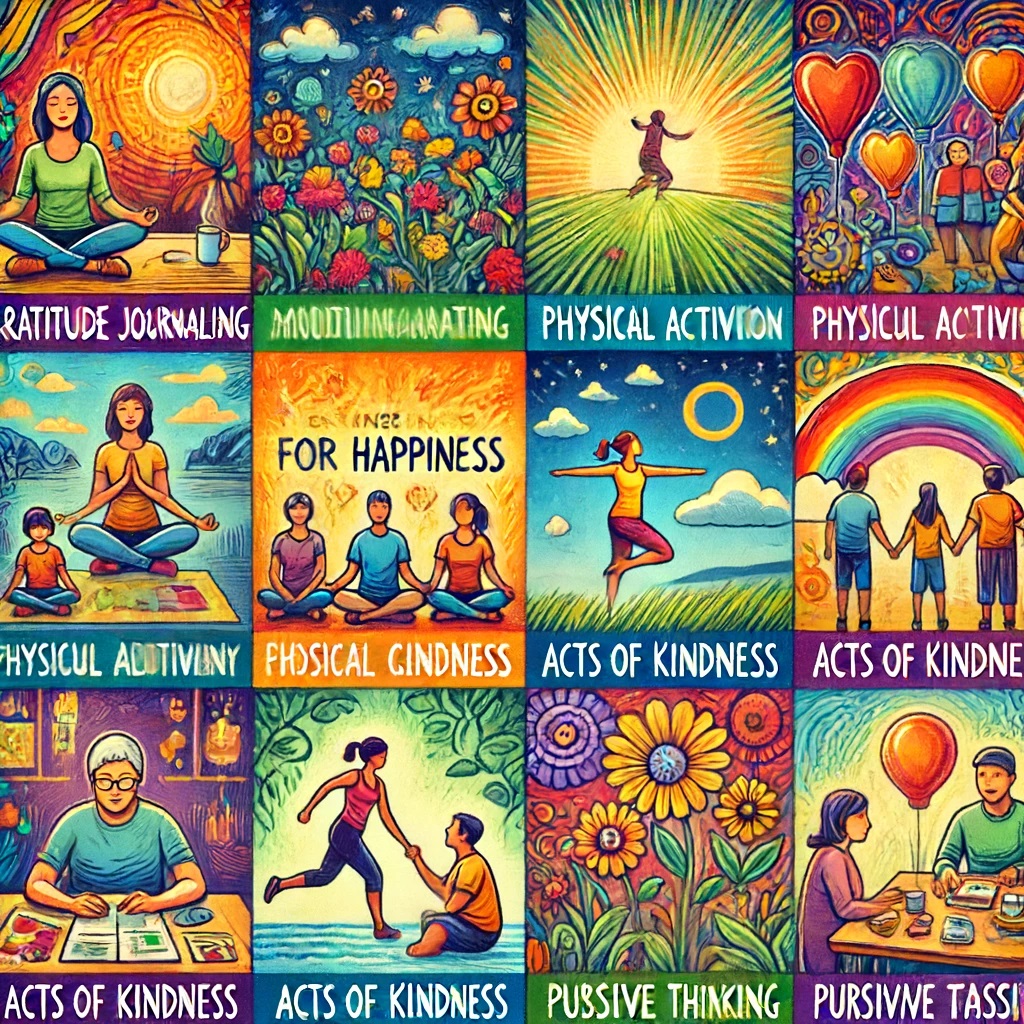
Acts of Kindness

Performing acts of kindness can boost happiness by fostering a sense of connection and purpose. Small gestures, such as helping a neighbor, volunteering, or simply offering a kind word, can make a big difference in someone else’s life and your own. Challenge yourself to perform one act of kindness each day. For instance, pay for someone’s coffee, help a colleague with a task, or write a thank-you note to express your appreciation.

Physical Activity

Regular physical activity is not only beneficial for your physical health but also for your mental well-being. Exercise releases endorphins, which are natural mood lifters. Aim for at least 30 minutes of moderate exercise most days of the week. Choose activities you enjoy, such as walking, dancing, swimming, or playing a sport. For example, start your day with a morning jog, join a local dance class, or take evening walks in your neighborhood.

Pursuing Meaningful Goals

Setting and pursuing meaningful goals can provide a sense of purpose and direction in life. When your goals align with your values and passions, achieving them can bring a deep sense of fulfillment. Break your goals into manageable steps and celebrate your progress along the way. For instance, if your goal is to learn a new skill, such as playing an instrument or speaking a new language, set aside dedicated time each week to practice and track your improvement.

Cultivating Optimism

Optimism is the ability to focus on the positive aspects of life and expect good things to happen. Cultivating optimism can enhance resilience, improve health, and increase happiness. Practice reframing negative thoughts into positive ones. For example, instead of thinking, “I can’t do this,” shift your mindset to, “This is challenging, but I can learn and grow from it.” Surround yourself with positive influences and inspirational content to reinforce an optimistic outlook.

Engaging in Hobbies and Interests

Participating in activities you enjoy can bring joy and satisfaction to your life. Hobbies and interests provide opportunities for creativity, relaxation, and social interaction. Make time for activities that excite and engage you, whether it’s painting, gardening, reading, or playing a musical instrument. For example, join a book club, take up a new hobby, or dedicate a weekend afternoon to a creative project.

Sleep and Relaxation

Adequate sleep and relaxation are essential for maintaining mental and physical health. Lack of sleep can negatively impact mood, cognitive function, and overall well-being. Aim for 7-9 hours of sleep each night and establish a relaxing bedtime routine to improve sleep quality. Techniques such as deep breathing, progressive muscle relaxation, or reading a book can help you unwind and prepare for a restful night’s sleep.

The Power of Positive Thinking: Transform Your Life with Optimism

Positive thinking is more than just a fleeting mood; it’s a powerful tool that can transform your life. By adopting an optimistic mindset, you can improve your mental and physical health, enhance your relationships, and increase your overall happiness. Here’s how you can harness the power of positive thinking to create a more fulfilling life.

Understanding Positive Thinking

Positive thinking involves focusing on the good in any given situation, maintaining a hopeful attitude, and expecting positive outcomes. It doesn’t mean ignoring reality or pretending challenges don’t exist, but rather approaching life’s ups and downs with a positive outlook.

Benefits of Positive Thinking

Positive thinking can have profound effects on various aspects of your life. Studies have shown that it can reduce stress, improve cardiovascular health, boost the immune system, and increase longevity. Additionally, optimistic people tend to experience higher levels of success, better relationships, and greater overall happiness.

Practical Strategies for Cultivating Positive Thinking

1. Practice Gratitude

Gratitude is a cornerstone of positive thinking. By focusing on what you’re thankful for, you can shift your mindset from one of lack to one of abundance.

  • Example: Start a gratitude journal and write down three things you’re grateful for each day. This practice can help you recognize and appreciate the positive aspects of your life.

2. Reframe Negative Thoughts

Negative thoughts can undermine your optimism and well-being. Learning to reframe these thoughts into positive ones can help you maintain a positive outlook.

  • Example: If you catch yourself thinking, “I can’t do this,” reframe it to, “This is challenging, but I can learn and grow from it.” This shift in perspective can make a big difference.

3. Surround Yourself with Positivity

The people you spend time with can influence your mindset. Surround yourself with positive, supportive individuals who uplift and encourage you.

  • Example: Join a community group or club where you can meet like-minded people. Limit your interactions with those who drain your energy or bring negativity into your life.

4. Engage in Positive Self-Talk

The way you talk to yourself matters. Positive self-talk can boost your confidence and help you stay focused on your goals.

  • Example: Replace self-criticism with affirmations. Instead of saying, “I’m not good enough,” tell yourself, “I am capable and worthy of success.”

5. Visualize Success

Visualization is a powerful technique that involves imagining your goals and dreams as already achieved. This can help you stay motivated and focused on positive outcomes.

  • Example: Spend a few minutes each day visualizing your goals. Picture yourself succeeding and experiencing the emotions associated with that success.

6. Practice Mindfulness and Meditation

Mindfulness and meditation can help you stay present and focused, reducing stress and promoting a positive mindset.

  • Example: Incorporate mindfulness practices into your daily routine. Spend a few minutes each morning in meditation, focusing on your breath and letting go of negative thoughts.

7. Set Realistic Goals

Setting and achieving realistic goals can boost your confidence and reinforce positive thinking.

  • Example: Break down your larger goals into smaller, manageable steps. Celebrate your progress along the way to maintain your motivation and positive outlook.

8. Learn from Setbacks

Setbacks and failures are part of life. Learning to see them as opportunities for growth can help you maintain a positive attitude.

  • Example: When faced with a setback, ask yourself what you can learn from the experience. Use this knowledge to improve and move forward with optimism.

9. Engage in Acts of Kindness

Helping others can boost your mood and promote a positive mindset. Acts of kindness create a ripple effect of positivity.

  • Example: Volunteer for a local charity, help a neighbor, or simply offer a kind word to someone in need. These small acts can make a big difference.

10. Focus on Solutions

When faced with challenges, focus on finding solutions rather than dwelling on the problems. This proactive approach can help you stay positive and empowered.

  • Example: Instead of worrying about a problem, brainstorm possible solutions and take action. This can reduce anxiety and promote a sense of control.