
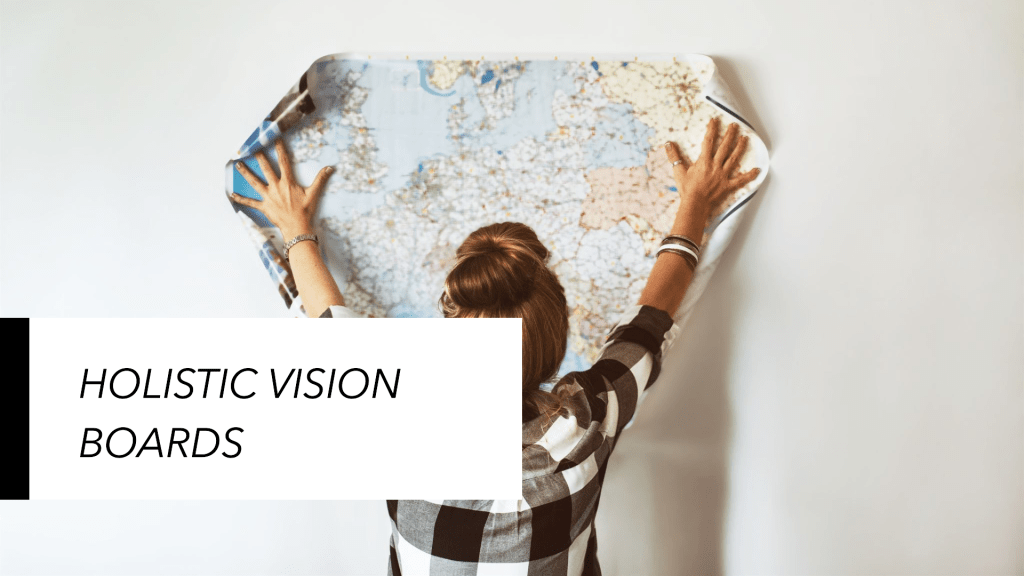
A vision board is a powerful tool to align your goals and aspirations with your energy. But what if you infused it with holistic elements? A holistic vision board focuses not just on external achievements but also on nurturing your mind, body, and spirit. By combining visualization, intention-setting, and mindfulness, you can create a vision board that resonates deeply with your personal values and wellness goals. Let’s explore how to manifest your dreams through this creative and transformative process.
1. Understand the Power of Vision Boards
Vision boards work by tapping into the Law of Attraction, where visualizing your goals can help bring them to reality. A holistic vision board goes beyond material desires, focusing on harmony, well-being, and inner peace.
- Why It Works: Seeing your goals daily keeps them at the forefront of your mind, creating a sense of alignment and motivation.
- Pro Tip: Think about how you want to feel when achieving your goals, not just what you want to achieve.
2. Gather Your Materials
Creating a vision board is a hands-on, creative process. Gather materials that inspire you and represent your aspirations.
- What You Need:
- A board or large piece of cardboard
- Magazines, photos, printed images, or art supplies
- Glue, scissors, markers, and stickers
- Pro Tip: Use recycled or sustainable materials to keep your vision board eco-friendly.
3. Define Your Holistic Goals
Before starting, take time to reflect on what you want to manifest in all areas of your life—health, relationships, career, personal growth, and spirituality.
- How to Define Goals:
- Write down your intentions in each area.
- Focus on goals that nurture your holistic well-being, like “cultivate mindfulness,” “improve physical fitness,” or “build meaningful connections.”
- Pro Tip: Use a journaling session or meditation to clarify your intentions.
4. Incorporate Visual and Emotional Elements
The power of a vision board lies in the connection between your visuals and emotions. Choose images, words, and symbols that resonate deeply with your aspirations.
- How to Practice:
- Select visuals that evoke the feelings you want to experience (e.g., calm, joy, confidence).
- Include affirmations or mantras like “I am at peace” or “I am capable of growth.”
- Pro Tip: Add personal photos or drawings for a unique, meaningful touch.
5. Use Color Psychology
Colors have a profound impact on mood and energy. Integrate color psychology into your vision board to amplify its effectiveness.
- Examples of Colors:
- Blue: Peace and calm
- Green: Growth and health
- Yellow: Positivity and energy
- Purple: Creativity and spirituality
- Pro Tip: Use a cohesive color palette to make your vision board visually appealing and energizing.
6. Include Holistic Themes
A holistic vision board incorporates elements that reflect balance and well-being. Go beyond traditional goals to focus on your inner state and lifestyle choices.
- Themes to Include:
- Mindfulness: Images of meditation or peaceful nature scenes
- Wellness: Photos of healthy meals or exercise
- Connection: Visuals of meaningful relationships or community
- Joy: Symbols of hobbies, travel, or creative pursuits
- Pro Tip: Add quotes or poetry that inspires you.
7. Make It Interactive
An interactive vision board encourages engagement and keeps your goals dynamic. This helps you stay motivated and connected to your aspirations.
- How to Practice:
- Use sticky notes for goals that may evolve.
- Include a section for tracking progress, like a gratitude list or small milestones.
- Pro Tip: Place your board where you’ll see it daily, such as near your desk or in a meditation corner.
8. Visualize Your Goals Daily
Visualization bridges the gap between intention and action. Spending even a few minutes each day with your vision board can strengthen your focus and motivation.
- How to Practice:
- Spend 5 minutes each morning visualizing yourself achieving your goals.
- Focus on the emotions you feel in that reality.
- Pro Tip: Pair this practice with deep breathing or a morning affirmation.
9. Refresh and Revisit Your Board
As you grow and your goals evolve, your vision board should adapt to reflect your current aspirations.
- How to Practice:
- Review your board monthly or quarterly to update goals or add new inspirations.
- Celebrate milestones by adding symbols of success, like a star or heart sticker.
- Pro Tip: Take a photo of your vision board to keep a digital version on your phone for motivation on the go.
Conclusion
A holistic vision board is more than a collection of images—it’s a powerful tool for manifesting a balanced, intentional life. By focusing on your mind, body, and spirit, you create a visual reminder of the life you’re working toward. Take time to craft your board thoughtfully, reflect on it daily, and embrace the journey of turning your aspirations into reality.
For more insights on setting intentions and creating balance, check out my book, The Mindful Executive: https://www.amazon.com/dp/B0D75YJCLW.
 Holistic Wellness Guide