Starting the day with a calm and focused mindset can significantly enhance your overall well-being and productivity. Integrating yoga and meditation into your morning routine helps you begin the day with clarity and energy.
Begin with Gentle Yoga: Kickstart your morning with gentle yoga poses to wake up your body and mind. Poses like Cat-Cow, Downward-Facing Dog, and Child’s Pose are excellent for stretching and energizing your body.
Example: Spend 10 minutes in the morning practicing these poses on a yoga mat in a quiet space. This helps improve flexibility and reduce morning stiffness.
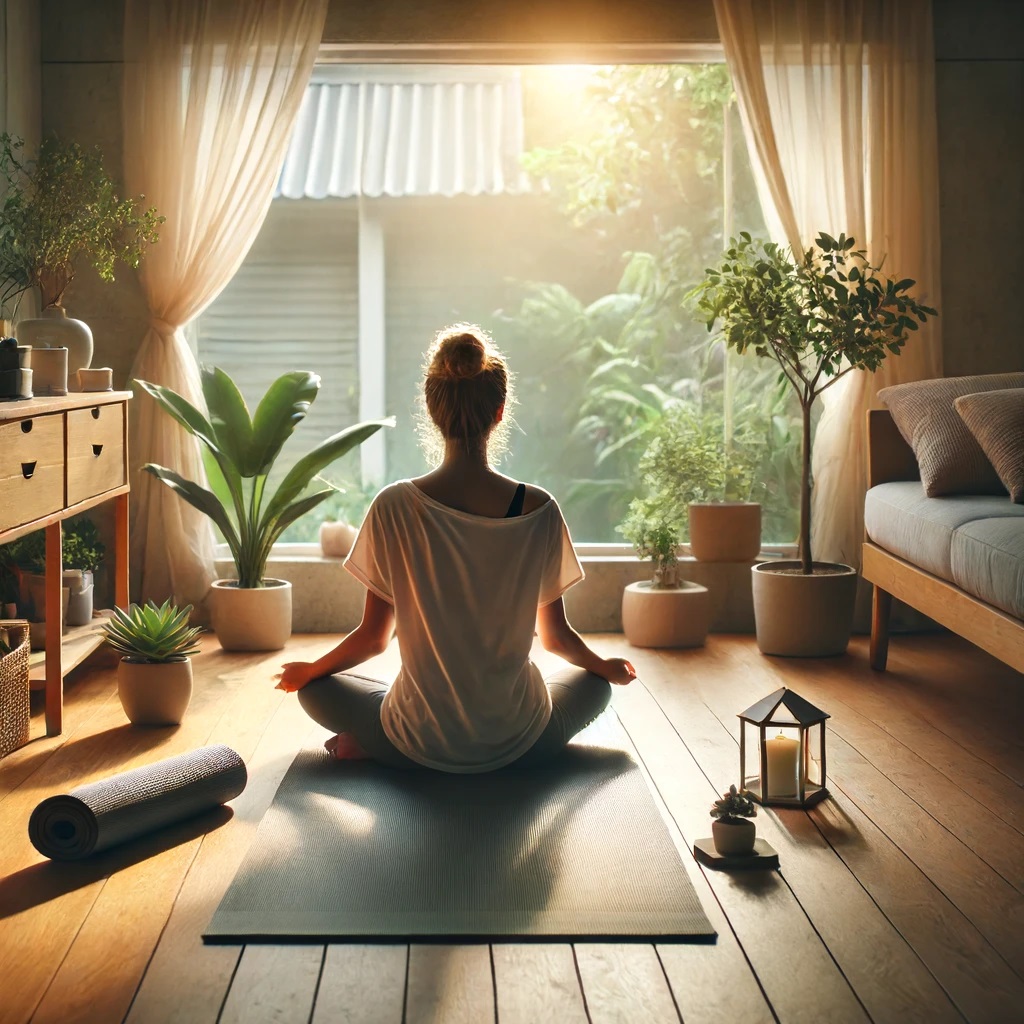
Transition to Meditation: After yoga, transition to a meditation session. Find a comfortable seated position, close your eyes, and focus on your breath. Meditation helps calm the mind, reduce stress, and set a positive tone for the day.
Example: Practice meditation for 10-15 minutes. Use guided meditation apps if needed, focusing on deep breathing and mindfulness.
Create a Peaceful Environment: Set up a dedicated space for your morning routine. Ensure it’s quiet, clutter-free, and filled with natural light. Adding elements like plants, candles, or soft music can enhance the ambiance.
Example: Designate a corner of your room for yoga and meditation. Decorate it with calming colors and inspirational quotes to motivate you.
Consistency is Key: Consistency is essential for reaping the benefits of yoga and meditation. Make this routine a daily habit to experience long-term improvements in your mental and physical health.
Example: Stick to your routine even on busy days. The consistency will help you maintain balance and resilience throughout your daily challenges.
By starting your day with yoga and meditation, you cultivate mindfulness and serenity, preparing yourself for whatever the day may bring.
Find Your Calm: 10 Mindfulness Practices for Stress Relief
In today’s fast-paced world, stress has become a common companion for many of us. However, mindfulness practices can provide a powerful way to combat stress and bring a sense of calm and balance to your life. In this post, we’ll explore ten effective mindfulness practices that you can incorporate into your daily routine to help manage and reduce stress.
Practice 1: Deep Breathing: Deep breathing is one of the simplest yet most effective ways to relieve stress. By focusing on your breath, you can calm your mind and body, reducing the physiological symptoms of stress.
Instructions:
Find a comfortable sitting position.
Inhale deeply through your nose, allowing your abdomen to expand.
Exhale slowly through your mouth.
Repeat for 5-10 minutes.
Practice 2: Body Scan Meditation: Body scan meditation helps you become aware of physical sensations in your body, promoting relaxation and reducing tension.
Instructions:
Lie down in a comfortable position.
Close your eyes and take a few deep breaths.
Slowly bring your attention to each part of your body, starting from your toes and moving up to your head.
Notice any sensations, tension, or areas of relaxation.
Practice 3: Mindful Walking: Mindful walking involves paying close attention to the experience of walking, helping you stay present and connected to the moment.
Instructions:
Find a quiet place to walk.
Focus on the sensation of your feet touching the ground.
Notice the movement of your legs and the rhythm of your breath.
Stay present and observe your surroundings.
Practice 4: Gratitude Journaling: Writing down things you are grateful for can shift your focus from stress to positive aspects of your life.
Instructions:
Take a few minutes each day to write down three things you are grateful for.
Reflect on why these things are meaningful to you.
Notice how this practice changes your perspective over time.
Practice 5: Mindful Eating: Mindful eating involves paying full attention to the experience of eating, which can enhance enjoyment and reduce overeating.
Instructions:
Sit down to eat without distractions.
Notice the colors, smells, and textures of your food.
Chew slowly and savor each bite.
Pay attention to how your body feels before, during, and after eating.
Practice 6: Progressive Muscle Relaxation: This practice involves tensing and then relaxing different muscle groups to release physical tension and reduce stress.
Instructions:
Find a comfortable sitting or lying position.
Start with your feet and work your way up to your head.
Tense each muscle group for 5-10 seconds, then release.
Notice the sensation of relaxation.
Practice 7: Visualization: Visualization involves creating a mental image of a peaceful place or situation, helping to calm the mind and body.
Instructions:
Find a quiet place to sit or lie down.
Close your eyes and take a few deep breaths.
Imagine yourself in a peaceful place, such as a beach or forest.
Engage all your senses and fully immerse yourself in the experience.
Practice 8: Mindful Listening: Mindful listening involves paying full attention to the sounds around you, helping to bring your focus to the present moment.
Instructions:
Sit in a quiet place and close your eyes.
Notice the sounds around you without judgment.
Focus on each sound, one at a time.
Allow yourself to be fully present with the experience.
Practice 9: Loving-Kindness Meditation: This meditation involves sending positive thoughts and wishes to yourself and others, promoting feelings of compassion and connection.
Instructions:
Sit comfortably and close your eyes.
Repeat phrases like, “May I be happy, may I be healthy, may I be safe.”
Gradually extend these wishes to others, including loved ones, acquaintances, and even those you have conflicts with.
Feel the sense of compassion and connection grow.
Practice 10: Mindfulness Apps: Using mindfulness apps can provide guided meditations and mindfulness exercises to help you practice regularly.
Instructions:
Download a mindfulness app such as Headspace, Calm, or Insight Timer.
Explore the guided meditations and exercises offered.
Set aside time each day to practice with the app.
Incorporating mindfulness practices into your daily routine can significantly reduce stress and improve your overall well-being. At Alchemy International, we believe in the power of holistic practices to support a balanced and healthy life. Try these mindfulness techniques and discover the positive impact they can have on your stress levels and overall mental health.



 Holistic Wellness Guide