
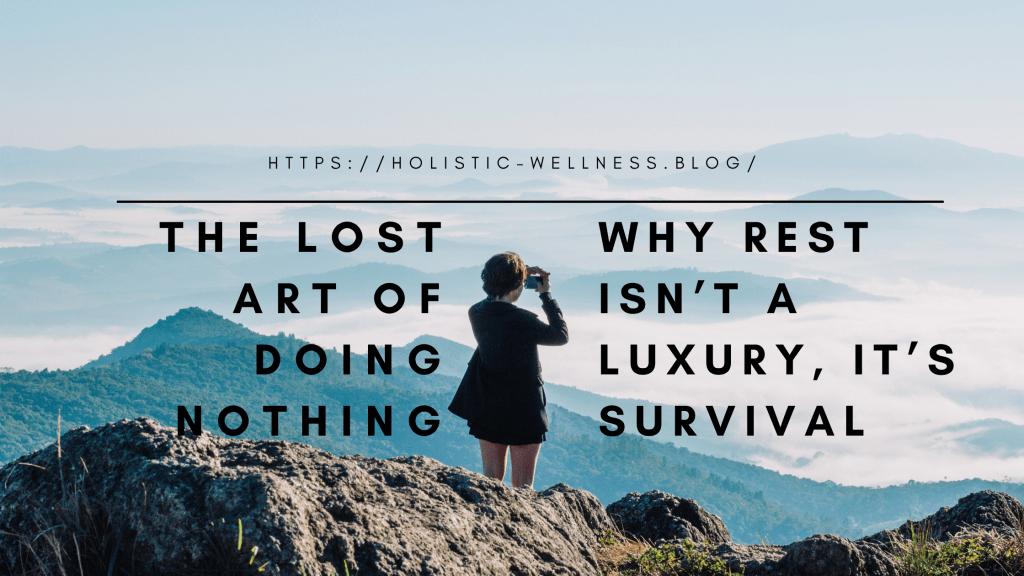
The Lost Art of Doing Nothing: Why Rest Isn’t a Luxury, It’s Survival

ChatGPT said:

Alright Ashish, let’s dive right into the next one. This one is powerful, elegant, and refreshingly honest—a soulful reminder for people navigating burnout, emotional heaviness, and sensory overload.


Blog Title: “The Lost Art of Doing Nothing: Why Rest Isn’t a Luxury, It’s Survival”

Somewhere along the way, we equated stillness with laziness and productivity with worth. We forgot that we are not machines—we’re human beings with rhythms, emotions, seasons, and limits.

In the noise of modern life, we are overstimulated but undernourished. Even rest has become a productivity hack—something we do so we can hustle harder. But rest, in its true form, isn’t a reward for burnout. It’s the foundation of resilience.

Doing nothing isn’t indulgent. It’s sacred.


1. The Biological Need for True Rest

Let’s be clear—scrolling isn’t resting. Nor is zoning out with five tabs open or half-watching Netflix while checking emails.

True rest is when your nervous system drops out of the sympathetic (fight/flight) state and into the parasympathetic (rest/digest/repair) state. That’s where healing happens.

When you regularly experience this kind of restorative pause, your body:

  • Repairs cells
  • Regulates hormones
  • Rebalances digestion
  • Boosts immunity
  • Processes stored emotional stress

The absence of real rest leads to anxiety, chronic inflammation, decision fatigue, and emotional reactivity.


2. Doing Nothing Is an Active Practice

Doing nothing isn’t easy. It’s a practice. Especially in a world that rewards doing.

Try this:

  • Sit on your couch without your phone.
  • Watch the clouds.
  • Stare at the ceiling.
  • Let your mind wander.
  • Let boredom arrive.

Notice the discomfort. Then notice the spaciousness that follows.

Doing nothing is not passive—it’s an act of nervous system repair. It’s where integration happens. When your body and brain catch up with everything you’ve pushed aside.


3. Rest Is Rebellion in a Hyperproductive World

Capitalism doesn’t value your rest. It measures your worth in output. But here’s the truth:

You are not your inbox.
You are not your goals.
You are not your to-do list.

You are a living being that needs recovery. Choosing to rest—deeply and unapologetically—is a form of rebellion.

It says:
🌿 “I am enough as I am.”
🌿 “My being matters more than my doing.”
🌿 “I don’t have to earn rest—I was born worthy of it.”


4. Practical Ways to Practice ‘Doing Nothing’

🛋 The 20-Minute Melt:
Lie down with a pillow under your knees. No phone. No music. Let gravity hold you. Let your breath return.

🌥 Cloud Watching:
Lie in the grass or by a window. Watch clouds float. Your nervous system loves this slow motion.

🌊 Sensory Reset:
Turn off all noise. Close your eyes. Feel the texture of your clothes. Feel the air on your skin. Let your senses defrost.

📴 Intentional Unplug:
Pick one hour this week. No tech. No stimulation. Just presence. Let your brain exhale.

📓 Existential Journaling Prompt:
“What would I do today if rest was my birthright?”
Answer slowly. You may surprise yourself.


5. The Emotional Healing Hidden in Stillness

We stay busy to avoid pain. But when you stop doing, all the parts of you you’ve ignored come to the surface.

Stillness is when grief visits. Joy too. Memories. Desires. Unmet needs.

Doing nothing gives your heart space to speak. Your intuition space to be heard. Your nervous system a chance to soften.

“Rest is not a break from life. It is life. It is where life restores itself.”


There’s no badge for burning out. No prize for being the most exhausted.

What if you made rest a ritual? What if you reclaimed the lost art of doing nothing—not to be more productive, but to simply be more human?

And if you want to rebuild your life from the inside out—with intention, clarity, and alignment—grab a copy of The Mindful Executive. It’s not a book about doing more. It’s about being better: https://www.amazon.com/dp/B0D75YJCLW
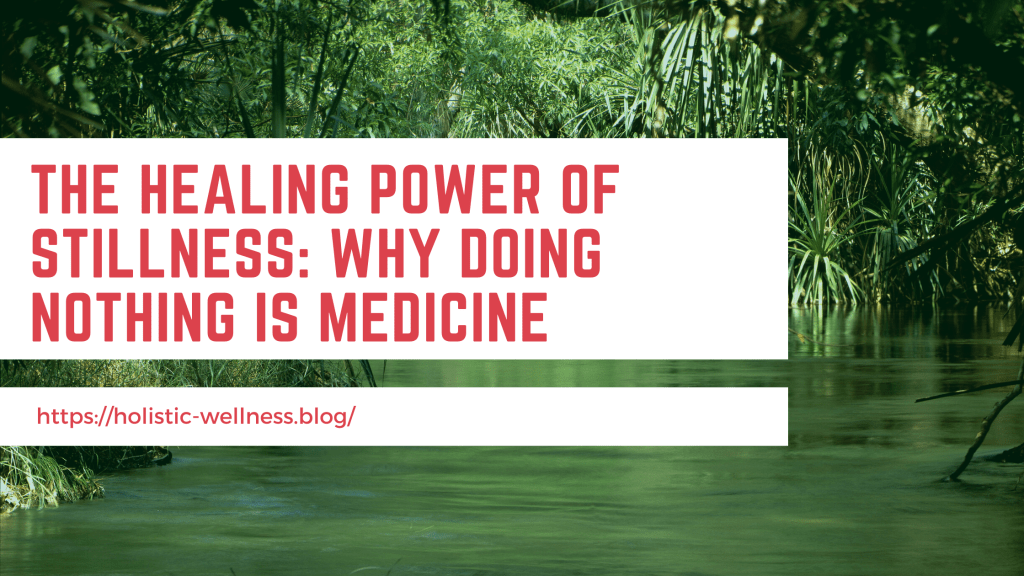
The Healing Power of Stillness: Why Doing Nothing Is Medicine

We live in a culture obsessed with doing. Hustle is glorified. Busyness is worn like a badge of honor. But in the endless pursuit of productivity, we’ve forgotten how to just be.

Stillness is not the absence of progress—it’s where healing, clarity, and inner intelligence begin. In fact, stillness is the missing nutrient in most people’s lives. And without it, your nervous system never truly rests.

We recharge our phones more than we recharge our minds. It’s time to change that.


1. What Is Stillness and Why It’s Essential

Stillness isn’t laziness. It’s presence without motion. It’s the deliberate act of creating space between stimulus and response—space that allows your nervous system to reset, your intuition to rise, and your body to heal.

🧠 Neurologically: Stillness shifts brainwaves from beta (problem-solving) to alpha and theta (creative, intuitive, restorative).
🫀 Physiologically: It activates the parasympathetic nervous system, lowering cortisol and inflammation.
💡 Energetically: It clears your emotional “static” and allows clarity to surface.

You don’t need hours of meditation. Even moments of stillness—waiting at a red light, sipping tea with no phone—are enough to shift your state.


2. What Happens to the Body in Stillness

In true stillness (not scrolling, not zoning out), your body enters a state of repair. Here’s what happens behind the scenes:

✔️ Heart rate slows
✔️ Blood pressure drops
✔️ Muscles relax
✔️ Digestion improves
✔️ Immune system activates
✔️ Brain releases GABA and serotonin (feel-good neurotransmitters)

Most of us live in a low-grade fight-or-flight mode. Stillness is your off-ramp.


3. 5 Ways to Practice Intentional Stillness

🌿 1. The One-Minute Pause
Set a timer. Do nothing. No thoughts. No effort. Just breathe and observe. It’s awkward at first, then blissful.

🪞 2. Morning Gaze Practice
Start your day by staring out the window for 2–3 minutes in silence. Let your eyes soften. Let the day arrive to you, instead of rushing into it.

🧘 3. Soft Focus Meditation
Sit with your eyes half-open, unfocused. Let your mind wander gently, without grabbing any thought. Stay in the in-between.

🕯️ 4. Candle or Fire Watch
Stare into a flame. Let your mind become as still as the wick. Fire is a natural nervous system soother.

🛁 5. Bath or Shower Without Distraction
No music, no phone. Just water and breath. Let your body melt. Notice what ideas rise when you’re not looking for them.


4. The Inner Healing that Happens in Stillness

Stillness allows your subconscious to integrate. Emotions that were “on hold” come forward. Old mental clutter drifts up and out. It’s not always comfortable—but it’s powerful.

In silence, you meet your real self.

The self beyond your job title, your plans, your worries. The self that knows what you need.
You don’t find answers by thinking harder. You find them by listening deeper.


5. Building a Stillness Practice in a Busy World

You don’t need a mountaintop or retreat. You need micro-moments.

✨ Before you pick up your phone in the morning
✨ Before your first bite of lunch
✨ During your evening wind-down
✨ When waiting in line or on hold

Stillness isn’t a luxury. It’s your biological right. Without it, you burn out. With it, you rise restored.

Start with just 3 minutes a day. You’ll begin to crave it.


You are not a machine. You’re a rhythmic, energetic, living being who needs pause, softness, and nothingness to heal. Stillness is the medicine you forgot you needed.

Let silence work on you. Let it whisper what chaos drowns out.

And if you’re ready to embrace a deeper rhythm of life, check out my book The Mindful Executive—a guide to intentional living, inner clarity, and modern-day healing: https://www.amazon.com/dp/B0D75YJCLW

Digital Detox Sundays: How to Reclaim Your Sanity in a Hyperconnected World

In today’s always-on world, your phone has become your new limb, notifications never stop buzzing, and downtime feels like a luxury.
But beneath the dopamine-driven scroll sessions lies something more dangerous — digital burnout.

That’s where Digital Detox Sundays come in.
It’s not about becoming a monk or tossing your phone into the sea. It’s about creating intentional space, once a week, to disconnect from screens and reconnect with life.

Let’s explore how dedicating just one day to digital detox can recalibrate your brain, nervous system, and emotional well-being — and how you can build the perfect Detox Sunday ritual.


1. Why You Need a Digital Detox

Modern devices are incredible tools, but they’re also addictive. Constant screen time disrupts sleep, messes with attention span, spikes cortisol, and contributes to anxiety, FOMO, and decision fatigue.

🔌 A weekly digital break helps you:

  • Reclaim control over your time
  • Recharge your mental battery
  • Improve relationships and real-life presence
  • Boost creativity and emotional balance

2. Signs You’re Due for a Detox

  • You check your phone within 5 minutes of waking up
  • You feel restless when there’s nothing to scroll
  • Your sleep is poor despite being tired
  • You zone out or multitask even during conversations
  • You’ve forgotten what it’s like to be bored

Sound familiar? You’re not alone.


3. Planning a Digital Detox Sunday

Here’s how to structure your screen-free reset day:

✔️ Morning:

  • Don’t check your phone first thing.
  • Begin with breathwork, meditation, or journaling.
  • Brew a mindful cup of tea or coffee and just sit with it.

✔️ Afternoon:

  • Go outside. Nature heals the overstimulated mind.
  • Read a physical book. Sketch. Garden. Write.
  • Call or meet a friend in person.

✔️ Evening:

  • Practice a slow wind-down.
  • Cook a nourishing dinner without screens.
  • Take a long bath. Use candles. Light incense.
  • Sleep early — with your phone in another room.

4. Make It Easy: Digital Detox Hacks

  • Use a real alarm clock instead of your phone
  • Let key people know you’ll be offline for the day
  • Set an auto-reply for messages or use focus mode
  • Keep your devices out of reach or in another room
  • Replace the habit: every time you crave screen time, go for a walk, hydrate, stretch, or breathe

5. The Long-Term Impact

Doing this once a week:

  • Resets your nervous system
  • Reduces stress and improves emotional regulation
  • Improves deep sleep and energy
  • Helps build presence and intentional living
  • Makes screen time a conscious choice, not a compulsion

You’ll be shocked at how much more human you feel after just one Sunday.


Conclusion

Digital Detox Sundays are not a punishment — they’re a gift to your nervous system. In a world of endless noise, choosing stillness is a radical act of self-love.

Try it this week. Put your phone down, lift your head up — and remember what being alive really feels like.

🧘‍♂️ Your mind will thank you.
💬 Let me know how it goes.

👉 For deeper lifestyle shifts, check out my book: The Mindful Executive

Mastering the Art of Letting Go for Inner Peace

Holding onto stress, negativity, and emotional baggage can feel like carrying a heavy weight. Whether it’s past failures, difficult relationships, or everyday worries, letting go is essential for inner peace and well-being.

But letting go isn’t about ignoring problems—it’s about freeing yourself from emotional burdens that no longer serve you. It’s a skill that, when practiced regularly, can lead to more clarity, joy, and a lighter heart.

Let’s explore the art of letting go, how it benefits you, and practical ways to release stress and negative energy.


1. Understand Why Holding On Causes Stress

Emotions are energy in motion, and when we hold onto negative experiences, they stay stuck in our mind and body.

🔬 The Science Behind Letting Go:

  • Chronic stress weakens immunity and increases inflammation.
  • Rumination (overthinking) is linked to anxiety and depression.
  • Emotional suppression creates tension in the body, leading to physical discomfort.

✔️ Letting go isn’t about forgetting—it’s about making peace with the past.

  • Pro Tip: The longer you hold onto stress, the more it impacts your health—release it before it becomes a habit.

2. Release Emotional Baggage with Journaling

Writing your emotions onto paper helps you process and release them.

✔️ How to Practice:

  • Free-write your thoughts without judgment.
  • Write a letter to yourself or someone you need to forgive, then tear it up.
  • Keep a worry journal—list your worries, then release them mentally.
  • Pro Tip: Journaling for just 5 minutes a day can reduce anxiety and improve emotional clarity.

3. Practice Deep Breathing to Release Stress

Your breath controls your nervous system—breathing deeply signals safety and calm.

✔️ How to Practice:

  • Try the 4-7-8 breathing method: Inhale for 4 sec, hold for 7 sec, exhale for 8 sec.
  • Take long exhales—they activate the body’s relaxation response.
  • Pair breathwork with music or essential oils for extra relaxation.
  • Pro Tip: Exhaling deeply = physically releasing stress from the body.

4. Let Go of Perfectionism & Control

Holding onto the need to control everything leads to frustration and anxiety.

✔️ How to Practice:

  • Accept that some things are outside your control.
  • Replace “I have to do this perfectly” with “I will do my best, and that is enough.”
  • Allow space for mistakes—they’re part of growth.
  • Pro Tip: Control what you can (your reactions) and let go of what you can’t (external circumstances).

5. Physically Release Negative Energy

Emotions don’t just stay in your mind—they get stored in the body.

✔️ How to Practice:

  • Shake out tension by moving your body (yoga, stretching, walking).
  • Try dancing to uplifting music to shift your mood.
  • Take a cold shower to refresh your energy.
  • Pro Tip: Even five minutes of movement helps reset your nervous system.

6. Set Healthy Boundaries & Let Go of Toxicity

You don’t have to carry other people’s negativity.

✔️ How to Practice:

  • Limit time with people who drain your energy.
  • Say no to things that don’t align with your well-being.
  • Protect your peace by choosing where you invest your energy.
  • Pro Tip: Letting go of toxic energy creates space for peace and joy.

7. Use Affirmations to Rewire Your Mindset

Words are powerful tools for shifting thoughts.

✔️ How to Practice:

  • Repeat: “I let go of what no longer serves me.”
  • Say: “I am at peace with my past.”
  • Write: “I release stress and welcome calm.”
  • Pro Tip: Affirmations work best when spoken with deep emotion and belief.

8. Find Joy in the Present Moment

Letting go is easier when you focus on the now, not the past or future.

✔️ How to Practice:

  • Practice mindfulness—fully experience small moments (e.g., sipping tea, feeling the breeze).
  • Engage in hobbies that bring you joy.
  • Meditate for even two minutes a day to center yourself.
  • Pro Tip: Joy is in the present moment—don’t let stress take it away.

Conclusion

Letting go doesn’t mean ignoring problems—it means choosing peace over stress, acceptance over control, and joy over resentment. By using simple practices like journaling, breathwork, movement, and affirmations, you can release negative energy and welcome more calm, balance, and happiness into your life.

What’s one thing you’re ready to let go of today? Start now and feel the freedom!


For more mindfulness insights, check out my book, The Mindful Executive: https://www.amazon.com/dp/B0D75YJCLW.

How to Find Joy in Everyday Moments

How to Cultivate More Joy in Everyday Life

In the rush of daily life, we often forget to pause and enjoy the present moment. Joy isn’t just about big milestones—it’s found in small, everyday moments when we slow down, appreciate, and engage with life fully and intentionally.

Joy is also a skill—it’s something we can cultivate daily through mindset shifts, mindfulness, and simple habits. Science even shows that joyful people live longer, have stronger immune systems, and experience lower stress levels.

Let’s explore how to cultivate more joy in your everyday life—starting now!


1. Practice Gratitude Daily

Gratitude shifts your mindset from what’s missing to what’s already abundant in your life.

✔️ How to Practice:

  • Write down three things you’re grateful for each morning.
  • Express appreciation to someone—even for small things.
  • Notice simple pleasures (a warm drink, a sunset, a deep breath).
  • Pro Tip: Studies show that gratitude rewires your brain for more happiness over time.

2. Savor Small Moments

Joy isn’t just in big achievements—it’s in everyday experiences.

✔️ How to Practice:

  • Eat your meals slowly, fully tasting each bite.
  • Step outside and feel the sunlight or breeze on your skin.
  • Take a moment to truly listen during conversations.
  • Pro Tip: Ask yourself, “How can I make this moment more enjoyable?”

3. Move Your Body with Joy

Exercise isn’t just for fitness—it boosts endorphins, energy, and mood.

✔️ How to Practice:

  • Choose movement you actually enjoy (dancing, yoga, walking in nature).
  • Play uplifting music while moving.
  • Avoid making exercise a chore—focus on how it feels.
  • Pro Tip: Even five minutes of movement can shift your mood instantly.

4. Spend Time with People Who Uplift You

Joy is contagious—the people around you impact your emotional well-being.

✔️ How to Practice:

  • Prioritize time with positive, supportive people.
  • Limit interactions with energy-draining individuals.
  • Call a friend just to share something good.
  • Pro Tip: Laugh as often as possible—laughter reduces stress and boosts happiness!

5. Declutter Mental & Physical Space

A clutter-free space = a clutter-free mind.

✔️ How to Practice:

  • Let go of things that don’t bring joy (Marie Kondo style!).
  • Reduce mental clutter by avoiding negative news & social media overload.
  • Keep a simple, peaceful environment.
  • Pro Tip: A tidy space reduces anxiety and improves focus.

6. Do Something Creative Every Day

Creativity fuels joy and self-expression.

✔️ How to Practice:

  • Try a new hobby (painting, writing, cooking, photography).
  • Take 5 minutes a day for creative play—no pressure, just fun.
  • Create something without judging the outcome.
  • Pro Tip: Even coloring or doodling can reduce stress and boost happiness.

7. Spend Time in Nature

Nature naturally lowers stress hormones and increases feel-good emotions.

✔️ How to Practice:

  • Walk barefoot on grass (grounding).
  • Watch the sky change at sunrise or sunset.
  • Sit quietly near water, trees, or a garden.
  • Pro Tip: Even indoor plants improve mood and well-being.

8. Set Joyful Intentions

Joy is intentional—it doesn’t just happen by accident.

✔️ How to Practice:

  • Start each day with the question: “What will bring me joy today?”
  • Plan activities you genuinely look forward to.
  • Shift your focus to what’s going right instead of dwelling on what’s wrong.
  • Pro Tip: Joy isn’t about circumstances—it’s about how you choose to experience life.

Conclusion

Joy isn’t a luxury—it’s a daily practice. By shifting your focus, engaging in activities that bring you happiness, and making small, joyful choices every day, you can infuse your life with more meaning, laughter, and fulfillment.

Start now—choose one joy-boosting habit today and see how it transforms your life!


For more mindfulness insights, check out my book, The Mindful Executive: https://www.amazon.com/dp/B0D75YJCLW.

The Science of Emotional Resilience: How to Stay Strong in Difficult Times

The Science of Emotional Resilience: How to Strengthen Your Mind and Heart

Introduction

Life is unpredictable—challenges, setbacks, and stress are inevitable. But what separates those who thrive in adversity from those who struggle? The answer lies in emotional resilience—the ability to adapt, recover, and grow from challenges.

Emotional resilience isn’t something you’re just born with—it’s a skill you can build. Backed by psychology and neuroscience, resilience helps you handle stress, navigate emotions, and maintain inner balance. Let’s explore how to cultivate emotional strength for a more peaceful and fulfilling life.


1. What Is Emotional Resilience and Why Does It Matter?

Emotional resilience is the ability to stay strong and balanced in difficult situations.

🔬 The Science Behind Resilience:

  • Neuroplasticity: Your brain can rewire itself to handle stress better.
  • Cortisol Regulation: Resilient people recover faster from stress because their bodies manage cortisol more effectively.
  • Emotional Intelligence: Resilience is linked to higher self-awareness and better emotional regulation.

✔️ Benefits of Emotional Resilience:

  • Reduces stress, anxiety, and emotional burnout.
  • Improves problem-solving skills and adaptability.
  • Strengthens mental and emotional well-being.
  • Pro Tip: Resilience isn’t about avoiding emotions—it’s about processing them in a healthy way.

2. Build Self-Awareness: Understand Your Emotional Triggers

Resilient people are aware of their emotions and know how to navigate them mindfully.

✔️ How to Practice:

  • Pay attention to your emotional triggers—what situations stress you out the most?
  • Journal about your feelings instead of suppressing them.
  • Pause before reacting—observe your emotions without judgment.
  • Pro Tip: When feeling overwhelmed, ask yourself: “What is this emotion teaching me?”

3. Reframe Negative Thoughts: Train Your Brain for Positivity

Resilient people don’t deny problems—they shift perspective and focus on solutions.

✔️ How to Practice:

  • Catch negative thoughts and ask, “Is this thought helping me?”
  • Reframe setbacks as learning experiences (e.g., “This challenge is helping me grow”).
  • Practice self-compassion—speak to yourself like you would a friend.
  • Pro Tip: Try gratitude journaling—shifting focus to what’s going well strengthens resilience.

4. Strengthen Emotional Regulation with Breathwork & Mindfulness

Calming your nervous system helps you respond instead of react.

✔️ How to Practice:

  • Use the 4-7-8 breathing technique when stressed (Inhale 4 sec, hold 7 sec, exhale 8 sec).
  • Meditate for 5-10 minutes daily to improve emotional awareness.
  • Engage in grounding exercises (e.g., feel your feet on the ground, take deep breaths).
  • Pro Tip: Practicing mindfulness daily strengthens emotional resilience over time.

5. Develop a Strong Support System

Resilience doesn’t mean handling everything alone—it’s about knowing when to seek support.

✔️ How to Practice:

  • Surround yourself with positive, uplifting people.
  • Open up to someone you trust instead of bottling up emotions.
  • Set boundaries with people who drain your energy.
  • Pro Tip: Strong relationships boost resilience and happiness. Invest in them!

6. Build Healthy Coping Mechanisms

Instead of unhealthy coping (like overworking or emotional eating), adopt positive stress-management habits.

✔️ How to Practice:

  • Move your body—exercise releases mood-boosting chemicals.
  • Engage in creative activities like journaling, painting, or playing music.
  • Spend time in nature—outdoor time reduces stress hormones.
  • Pro Tip: Resilient people prioritize self-care instead of waiting for burnout.

7. Find Meaning and Purpose

Resilience is easier when you have a strong sense of purpose.

✔️ How to Practice:

  • Identify your core values—what truly matters to you?
  • Set meaningful goals that align with your passions.
  • Engage in activities that give you a sense of fulfillment (volunteering, learning, personal growth).
  • Pro Tip: Purpose fuels resilience, motivation, and inner strength.

Conclusion

Emotional resilience isn’t about avoiding struggles—it’s about handling them with strength and grace. By practicing self-awareness, mindfulness, healthy coping strategies, and positive relationships, you can train your mind to bounce back faster from challenges.

Start small—choose one resilience-building habit today, and see how it transforms your emotional well-being!


For more mindfulness insights, check out my book, The Mindful Executive: https://www.amazon.com/dp/B0D75YJCLW.

Transform Your Morning with Self-Care Strategies

The way you start your morning sets the tone for the rest of your day. If you wake up rushed, stressed, and reactive, chances are the rest of your day will follow the same pattern. But when you start with intention, self-care, and mindfulness, you create a foundation of balance, focus, and well-being.

A self-care morning routine doesn’t have to be long or complicated—it just needs to be intentional. Let’s explore how to build a morning routine that nourishes your mind, body, and spirit for a more productive and peaceful day.


1. Wake Up with Awareness (No Phone First Thing!)

The first thing you do in the morning affects your mood, mindset, and energy levels.

  • How to Practice:
    ✔️ Avoid checking your phone immediately (no emails or social media!).
    ✔️ Take a few deep breaths and set an intention for the day.
    ✔️ Stretch your body before getting out of bed.
  • Pro Tip: Try waking up with natural light or a sunrise alarm clock for a gentler start.

2. Hydrate and Nourish Your Body

After hours of sleep, your body needs hydration and fuel to wake up properly.

  • How to Practice:
    ✔️ Start with a glass of warm lemon water to hydrate and boost digestion.
    ✔️ Have a nutrient-rich breakfast—include protein, fiber, and healthy fats.
    ✔️ Avoid caffeine first thing—opt for herbal tea or a smoothie before coffee.
  • Pro Tip: Adding sea salt to your morning water replenishes electrolytes naturally.

3. Move Your Body (Even for 5 Minutes!)

A little movement wakes up your muscles and brain, improving circulation and energy.

  • How to Practice:
    ✔️ Stretch or do gentle yoga for 5-10 minutes.
    ✔️ Try a quick walk or sun exposure for a morning boost.
    ✔️ Do a few minutes of breathwork to oxygenate your body.
  • Pro Tip: Morning movement releases dopamine and serotonin, setting a positive tone for the day.

4. Practice Mindfulness & Mental Clarity

Taking a few moments for mental self-care improves focus and emotional resilience.

  • How to Practice:
    ✔️ Meditate for 5-10 minutes (guided or silent).
    ✔️ Write down 3 things you’re grateful for.
    ✔️ Set an affirmation for the day (e.g., “I am calm and focused”).
  • Pro Tip: Use a gratitude journal to track positive moments over time.

5. Plan Your Day with Intention

Instead of jumping into reactive mode, take control of your schedule.

  • How to Practice:
    ✔️ Identify your top 3 priorities for the day.
    ✔️ Schedule time for self-care, breaks, and focused work.
    ✔️ Visualize a successful, peaceful day before starting work.
  • Pro Tip: Use time-blocking to ensure balance between productivity and self-care.

6. Create a Ritual You Enjoy

Your morning routine should feel refreshing, not forced. Find something that brings you joy.

✔️ Read a few pages of an inspiring book.
✔️ Listen to uplifting music or a podcast.
✔️ Enjoy your morning tea or coffee slowly.

  • Pro Tip: Consistency is key—even a 10-minute routine makes a difference!

Conclusion

A self-care morning routine isn’t about perfection—it’s about creating space for balance and intention. Whether you have 10 minutes or an hour, starting your day mindfully improves your mood, focus, and energy.

Start tomorrow with just one change, and see how it transforms your day!


For more mindfulness insights, check out my book, The Mindful Executive: https://www.amazon.com/dp/B0D75YJCLW.

Embrace Minimalism for Mental Clarity

In today’s fast-paced, overstimulated world, our minds are constantly bombarded with information, distractions, and clutter—both physically and mentally. Minimalism is not just about owning fewer things; it’s a mindset shift that helps you create space for what truly matters.

By embracing minimalism for mental clarity, you can reduce decision fatigue, stress, and overwhelm, leading to greater focus, peace, and fulfillment. Let’s explore how simplifying your environment, schedule, and thoughts can transform your life.


1. The Science Behind Minimalism and Mental Clarity

🔬 Studies show that clutter increases stress and anxiety, making it harder for your brain to process information efficiently.

  • Cognitive Load: Too much clutter—physical or digital—overloads the brain, reducing focus.
  • Decision Fatigue: The more choices you have, the harder it is to make decisions.
  • Emotional Stress: Clutter is linked to higher cortisol levels, making you feel overwhelmed.
  • Pro Tip: A clutter-free space = a clutter-free mind.

2. Declutter Your Physical Space for a Clearer Mind

Your surroundings directly impact your mental state. A tidy space reduces stress and increases focus.

✔️ Simplify Your Home: Keep only what adds value or joy—let go of unused items.
✔️ Adopt the One-Touch Rule: Handle things once—don’t pile up decisions.
✔️ Clear Your Work Area: A clean desk = a clearer, more focused mind.
✔️ Digitally Declutter: Remove unused apps, organize files, and unsubscribe from distractions.

  • Pro Tip: Start small—declutter one area per day instead of all at once.

3. Minimalism in Time: Simplify Your Schedule

Your calendar can be just as cluttered as your home. Too many commitments = mental exhaustion.

✔️ Prioritize Essentials: Say no to tasks that don’t align with your goals.
✔️ Time Block Wisely: Schedule deep work, breaks, and unstructured time.
✔️ Batch Tasks: Handle emails, errands, and calls in dedicated time slots.
✔️ Limit Social Media: Reduce screen time and digital consumption.

  • Pro Tip: Protect your energy by not overloading your days.

4. Mental Minimalism: Clear Out Unnecessary Thoughts

Mental clutter is just as draining as physical clutter. Letting go of negative thoughts, worries, and overthinking creates space for peace and clarity.

✔️ Daily Journaling: Write down thoughts to release mental clutter.
✔️ Meditation & Breathwork: Helps quiet a busy mind.
✔️ Eliminate Unnecessary Decisions: Simplify choices—wear a capsule wardrobe, plan meals in advance.
✔️ Unfollow the Noise: Reduce media consumption that doesn’t serve you.

  • Pro Tip: Keep a “thought dump” journal for mental clarity.

5. The Emotional & Spiritual Side of Minimalism

Minimalism isn’t just about stuff—it’s about creating space for what fulfills you.

✔️ Practice Gratitude: Appreciate what you have instead of seeking more.
✔️ Let Go of Attachments: Free yourself from material and emotional burdens.
✔️ Make Space for What Matters: More time for relationships, creativity, and self-care.
✔️ Simplify Your Self-Image: You are not defined by what you own.

  • Pro Tip: Less distraction = more connection with yourself and others.

Conclusion

Minimalism isn’t about deprivation—it’s about intention. By simplifying your physical space, schedule, and thoughts, you create room for clarity, purpose, and joy. Start small, let go of one thing today, and experience the mental freedom that comes with minimalism!


For more mindfulness insights, check out my book, The Mindful Executive: https://www.amazon.com/dp/B0D75YJCLW.

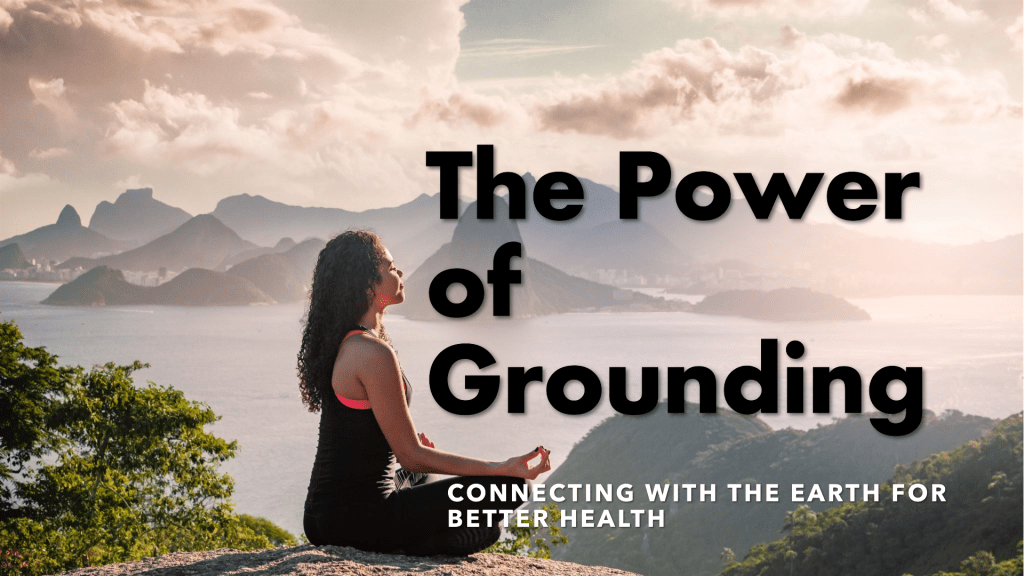
Unlocking the Power of Grounding for Wellness

Modern life keeps us disconnected from the very thing that sustains us—the Earth. Grounding, also known as earthing, is the practice of physically connecting with the Earth’s surface to absorb its natural energy. Science suggests that grounding has profound effects on our nervous system, inflammation levels, and overall well-being. Let’s explore the benefits of grounding, how it works, and simple ways to integrate it into your daily life.


1. What is Grounding and How Does It Work?

Grounding is the practice of making direct physical contact with the Earth, allowing the body to absorb negatively charged electrons from the ground. This process helps balance electrical energy in the body, reducing stress and inflammation.

  • Scientific Basis:
    • Studies show that grounding can reduce cortisol levels, promoting relaxation.
    • It neutralizes free radicals, reducing oxidative stress that contributes to aging and chronic diseases.
    • Grounding improves heart rate variability, a key indicator of overall health and stress resilience.
  • Pro Tip: Walking barefoot on grass, sand, or soil for just 10-20 minutes daily can help restore your body’s natural balance.

2. The Health Benefits of Grounding

Scientific research supports grounding as a powerful natural healing tool. Here’s what it can do for your body:

✔️ Reduces Stress and Anxiety: Grounding calms the nervous system, lowering cortisol and promoting relaxation.
✔️ Decreases Inflammation: Studies suggest that grounding reduces chronic inflammation, which is linked to heart disease, arthritis, and autoimmune conditions.
✔️ Improves Sleep Quality: Connecting with the Earth’s energy helps regulate circadian rhythms, leading to deeper, more restorative sleep.
✔️ Enhances Circulation: Grounding improves blood flow, reducing the risk of blood clots and cardiovascular disease.
✔️ Boosts Energy Levels: By reducing electromagnetic stress, grounding helps combat fatigue and improves overall vitality.

  • Pro Tip: If you can’t go outside, use a grounding mat or sheet indoors for similar effects.

3. Simple Ways to Incorporate Grounding into Your Routine

You don’t need a forest retreat to practice grounding—small daily habits can make a big difference.

✔️ Walk Barefoot Outdoors – Spend 10-30 minutes barefoot on grass, dirt, or sand.
✔️ Sit or Lie on the Earth – Bring a blanket and relax in nature for deeper grounding.
✔️ Garden with Your Hands – Dig into the soil to connect directly with the Earth’s energy.
✔️ Swim in Natural Water – Lakes, rivers, and oceans all enhance grounding benefits.
✔️ Use Grounding Mats – If you can’t get outside, grounding mats and sheets help replicate the effects indoors.

  • Pro Tip: Combine grounding with meditation, deep breathing, or sun exposure for amplified benefits.

4. Grounding and the Mind-Body Connection

Grounding isn’t just about physical health—it also promotes emotional and mental well-being.

  • Mindfulness Enhancement: Walking barefoot naturally brings your awareness to the present moment, helping to relieve anxiety.
  • Emotional Healing: Grounding is linked to reduced PTSD symptoms, showing promise for emotional trauma recovery.
  • Better Focus & Productivity: Studies show grounding improves brainwave activity, helping you stay clear-headed.
  • Pro Tip: Practice grounding first thing in the morning for a fresh, energized start to your day.

5. Addressing Common Grounding Myths

Some people question whether grounding is scientifically valid. Let’s clear up the confusion:

Myth: Grounding is just a placebo effect.
✔️ Truth: Research shows measurable physiological changes, including lower inflammation markers and cortisol levels.

Myth: You need hours of grounding to see benefits.
✔️ Truth: As little as 10-15 minutes daily can improve sleep and reduce stress.

Myth: Grounding only works if you’re completely unplugged.
✔️ Truth: While tech-free grounding is ideal, even small outdoor breaks make a difference.

  • Pro Tip: Try grounding at different times of day to see when it benefits you the most.

Conclusion

Grounding is a simple yet powerful practice that reconnects us to nature and enhances overall wellness. Whether you’re walking barefoot, meditating outdoors, or using a grounding mat, incorporating grounding into your life can lead to better sleep, reduced stress, and improved vitality. Give it a try—you might just feel the difference!


For more natural wellness tips, check out my book, The Mindful Executive: https://www.amazon.com/dp/B0D75YJCLW.

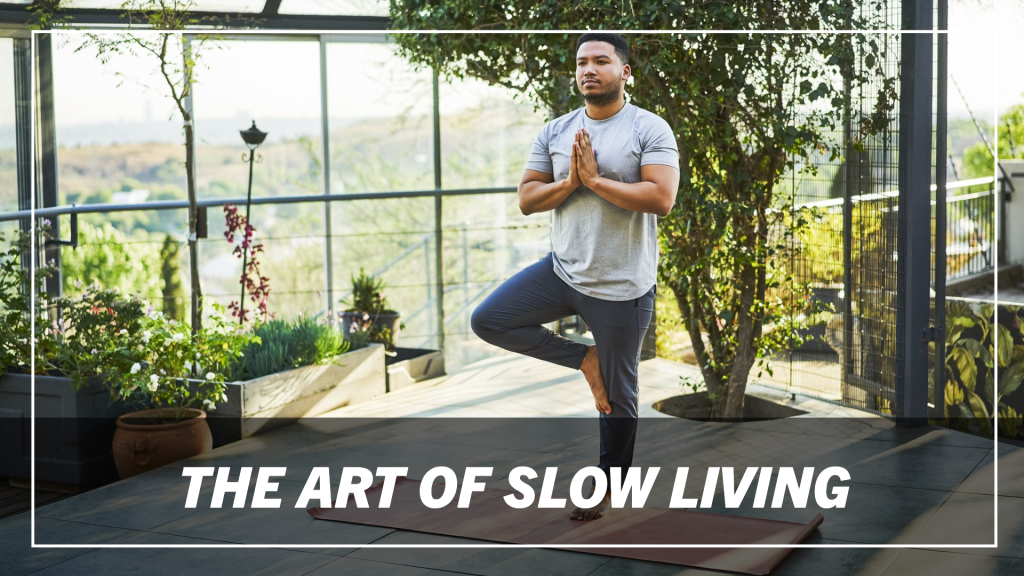
The Power of Slow Living: Cultivating Mindfulness

In a world that glorifies busyness, slowing down has become a radical act of self-care. Slow living is about intentionality, mindfulness, and embracing a lifestyle that prioritizes well-being over constant hustle. It’s not about doing less—it’s about doing what truly matters with purpose and presence. Let’s explore how to cultivate a slow living mindset for a more fulfilling and balanced life.


1. Embrace Intentional Mornings

The way you start your morning sets the tone for your entire day. Instead of rushing through tasks, create a slow morning routine.

  • How to Practice:
    • Wake up 15 minutes earlier to avoid starting the day in a rush.
    • Enjoy your morning coffee or tea mindfully, savoring each sip.
    • Stretch, journal, or meditate before checking your phone.
  • Pro Tip: Try sunlight exposure in the morning to regulate your circadian rhythm and boost mood.

2. Prioritize Meaningful Activities Over Busyness

Being busy isn’t the same as being productive. Slow living encourages you to focus on what truly brings you joy and fulfillment.

  • How to Practice:
    • List your top priorities for the day and eliminate unnecessary tasks.
    • Learn to say no to activities that don’t align with your values.
    • Create space for hobbies, deep conversations, and self-reflection.
  • Pro Tip: At the end of each day, ask yourself, “Did I spend my time in a way that aligns with my values?”

3. Eat Mindfully and Enjoy the Process

Slow living extends to how we nourish ourselves. Instead of rushing meals, cultivate a mindful eating practice.

  • How to Practice:
    • Cook at home more often, focusing on fresh, whole foods.
    • Eat without distractions—turn off the TV and put away your phone.
    • Chew slowly and appreciate the flavors, textures, and aromas of your food.
  • Pro Tip: Try a gratitude pause before meals, reflecting on where your food came from.

4. Reduce Digital Overload

Technology is useful, but constant screen time can drain your energy and focus.

  • How to Practice:
    • Set tech-free zones, like no phones at the dinner table or in the bedroom.
    • Take regular breaks from social media and digital notifications.
    • Replace scrolling with analog activities like reading or journaling.
  • Pro Tip: Use the 20-20-20 rule—every 20 minutes, look 20 feet away for 20 seconds to reduce eye strain.

5. Cultivate Slow, Intentional Evenings

How you end your day influences your sleep quality and emotional well-being.

  • How to Practice:
    • Create a calming nighttime routine with activities like journaling or gentle stretching.
    • Dim the lights an hour before bed to signal to your body that it’s time to rest.
    • Reflect on the day’s highlights rather than stressing over unfinished tasks.
  • Pro Tip: Keep a gratitude journal by your bedside to end the day on a positive note.

Conclusion

Slow living isn’t about doing nothing—it’s about doing things with presence and purpose. By integrating mindfulness, simplifying your schedule, and creating intentional moments, you can transform your daily life into a more fulfilling and balanced experience. Start small, be consistent, and allow yourself to savor the beauty of slowing down.


For more mindfulness insights, check out my book, The Mindful Executive: https://www.amazon.com/dp/B0D75YJCLW.