

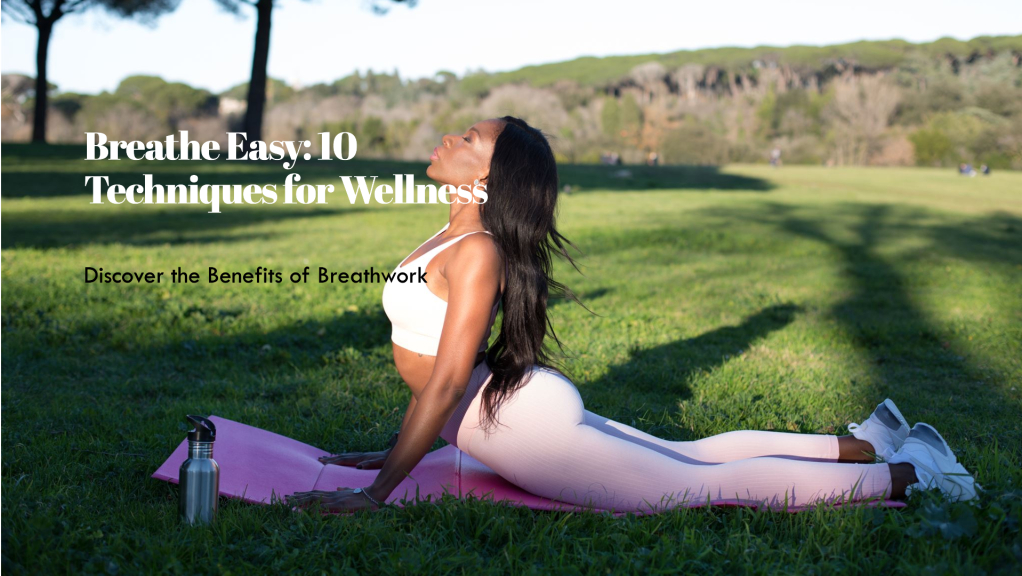
Breathwork is a powerful, natural tool for enhancing physical, mental, and emotional well-being. By practicing intentional breathing, you can reduce stress, increase energy, and improve focus. Breathwork techniques vary widely, from energizing and invigorating methods to calming and grounding exercises. Here are 10 different types of breathwork techniques, each offering unique benefits to support your holistic wellness journey.
1. Box Breathing: The Stress Reliever
Box breathing, also known as four-square breathing, is a technique that promotes calmness by balancing oxygen and carbon dioxide levels in the blood. It’s commonly used by athletes and military personnel to manage stress and improve focus.
- How to Practice: Inhale for 4 counts, hold for 4 counts, exhale for 4 counts, and hold again for 4 counts. Repeat for several cycles.
2. Alternate Nostril Breathing: The Energy Balancer
Also known as Nadi Shodhana, alternate nostril breathing balances the energy channels in the body, promoting mental clarity and reducing anxiety. It’s especially helpful for enhancing focus and calming the mind.
- How to Practice: Using your thumb, close your right nostril and inhale through the left nostril. Then close your left nostril, open the right, and exhale. Inhale through the right, close it, and exhale through the left. Repeat for 5-10 cycles.
3. Diaphragmatic Breathing: The Deep Relaxer
Diaphragmatic or belly breathing involves breathing deeply into the diaphragm rather than shallowly into the chest. This technique activates the parasympathetic nervous system, promoting relaxation and reducing stress.
- How to Practice: Place one hand on your chest and one on your abdomen. Inhale deeply, expanding your belly rather than your chest. Exhale slowly. Practice for 5-10 minutes to feel deeply relaxed.
4. 4-7-8 Breathing: The Sleep Promoter
Developed by Dr. Andrew Weil, the 4-7-8 technique is often recommended for relaxation and improving sleep quality. It slows down your heart rate, making it ideal for winding down at night.
- How to Practice: Inhale for 4 counts, hold for 7 counts, and exhale for 8 counts. Repeat 4-5 times before bed for a restful night’s sleep.
5. Kapalabhati: The Energizer
Kapalabhati, or “Skull Shining Breath,” is a powerful, energizing technique often used in yoga. It involves short, forceful exhales, which stimulate the respiratory system and energize the body.
- How to Practice: Sit comfortably and take a deep inhale. Begin a series of rapid, forceful exhales through the nose while pulling in your abdomen, allowing natural inhales between each exhale. Practice for 1-2 minutes to boost energy.
6. Ujjayi Breath: The Oceanic Calm
Ujjayi, also known as “Ocean Breath,” creates a soothing sound that mimics ocean waves. This technique is common in yoga practice for its calming effects and its ability to center the mind during challenging poses.
- How to Practice: Inhale deeply through the nose, slightly constricting the back of your throat as you exhale, producing a gentle ocean-like sound. Repeat throughout your yoga session or anytime you need to calm your mind.
7. Lion’s Breath: The Tension Releaser
Lion’s Breath is an expressive technique that involves opening your mouth wide and exhaling forcefully, which helps release physical and emotional tension.
- How to Practice: Take a deep breath in through your nose, then open your mouth wide, stick out your tongue, and exhale with a loud “ha” sound. Repeat 3-5 times for a refreshing tension release.
8. Bhramari: The Humming Bee Breath
Bhramari, or Humming Bee Breath, produces a calming, buzzing sound during exhalation. This vibration helps soothe the nervous system and is effective for relieving anxiety.
- How to Practice: Inhale deeply, then close your mouth and create a gentle humming sound as you exhale. Feel the vibration in your head and body. Practice for 5-10 minutes to experience tranquility.
9. Shitali: The Cooling Breath
Shitali, or Cooling Breath, is a technique that cools down the body and mind, making it ideal for use in warm weather or during heated situations.
- How to Practice: Roll your tongue into a “U” shape, inhale deeply through it, then close your mouth and exhale through your nose. Repeat for several breaths to cool down and feel refreshed.
10. Wim Hof Method: The Immune Booster
Developed by Wim Hof, this technique combines controlled hyperventilation with cold exposure and has been shown to strengthen the immune system. It’s known for boosting resilience, energy, and focus.
- How to Practice: Inhale fully through the nose or mouth, then exhale naturally. Repeat for 30 breaths, then hold your breath for as long as possible after the last exhale. Breathe in deeply, hold for 15 seconds, then release. Repeat 2-3 cycles.
Conclusion
Breathwork can transform your well-being, providing a direct pathway to relaxation, energy, and balance. Incorporating even one or two of these techniques into your daily routine can make a significant difference. Experiment with these practices to discover which ones resonate with you and bring more calm, energy, and clarity into your life.
For further exploration of mindfulness practices, check out my book, The Mindful Executive: https://www.amazon.com/dp/B0D75YJCLW.
 Holistic Wellness Guide