

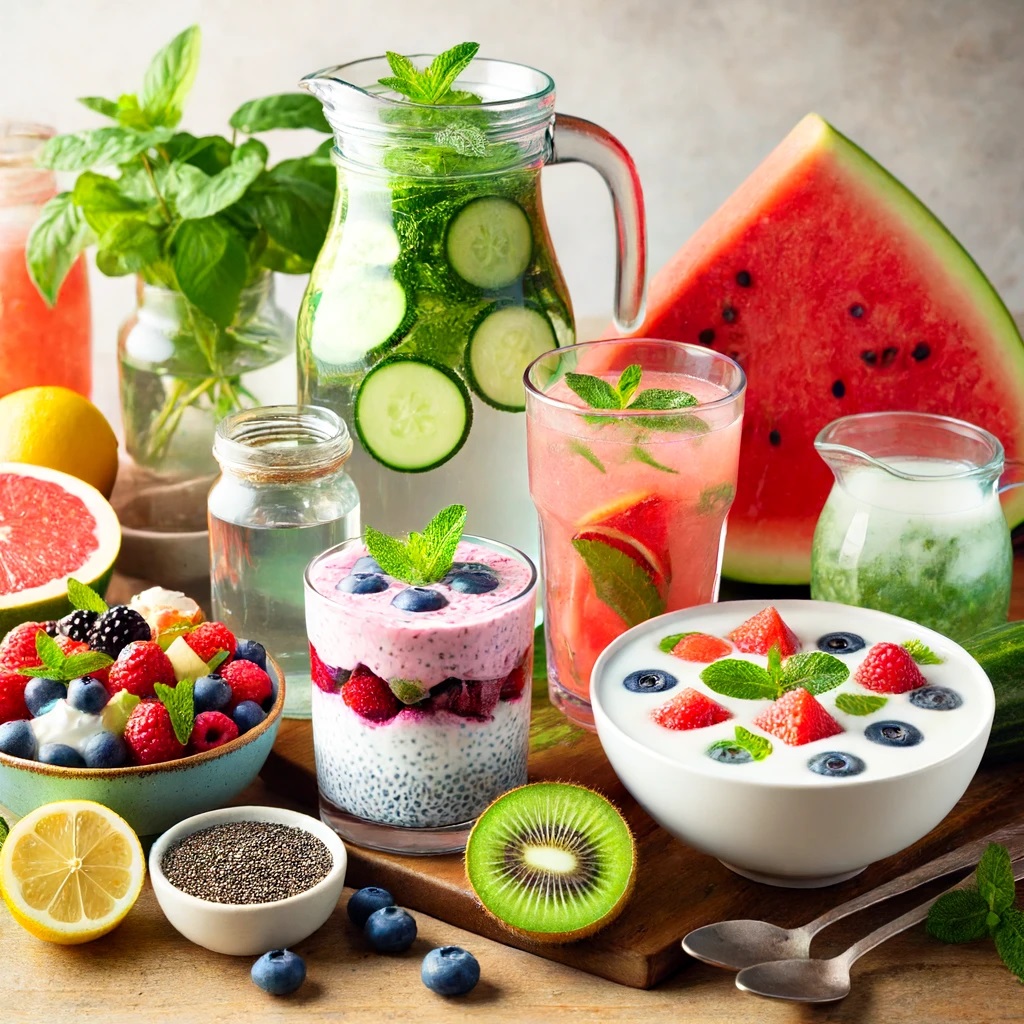
The Importance of Staying Hydrated: Benefits and Water-Rich Recipes

Staying hydrated is essential for maintaining good health and overall well-being. Proper hydration supports various bodily functions, including digestion, circulation, and temperature regulation. Here are the benefits of staying hydrated and some delicious recipes for water-rich foods and drinks to help you stay hydrated.

1. Benefits of Staying Hydrated

Improves Physical Performance

  • Proper hydration is crucial for maintaining energy levels and physical performance. Dehydration can lead to fatigue, reduced endurance, and decreased strength.
  • Tip: Drink water before, during, and after exercise to stay hydrated.

Enhances Brain Function

  • Staying hydrated helps maintain cognitive function, including concentration, memory, and mood.
  • Tip: Keep a water bottle at your desk to remind yourself to drink regularly.

Supports Digestion

  • Water is essential for healthy digestion, helping to break down food and absorb nutrients.
  • Tip: Drink a glass of water before meals to aid digestion.

Promotes Healthy Skin

  • Hydration is key for maintaining healthy, glowing skin. It helps to keep the skin moisturized and can reduce the appearance of fine lines and wrinkles.
  • Tip: Include hydrating foods in your diet, such as fruits and vegetables.

Regulates Body Temperature

  • Water helps regulate body temperature through sweating and respiration.
  • Tip: Drink water throughout the day, especially in hot weather or when exercising.

2. Water-Rich Recipes for Hydration

Cucumber and Mint Infused Water

  • Ingredients: 1 cucumber, sliced; a handful of fresh mint leaves; 1 liter of water.
  • Instructions: Combine cucumber slices and mint leaves in a pitcher of water. Let it infuse in the refrigerator for at least an hour before serving.
  • Benefits: This refreshing drink helps you stay hydrated and provides a burst of flavor without any added sugars.

Watermelon and Feta Salad

  • Ingredients: 2 cups of watermelon, cubed; 1/2 cup of feta cheese, crumbled; fresh mint leaves; 1 tablespoon olive oil; a pinch of salt.
  • Instructions: Combine watermelon cubes, feta cheese, and mint leaves in a bowl. Drizzle with olive oil and sprinkle with salt. Toss gently and serve.
  • Benefits: Watermelon is over 90% water, making this salad a hydrating and delicious option.

Berry and Yogurt Smoothie

  • Ingredients: 1 cup of mixed berries (strawberries, blueberries, raspberries); 1/2 cup of Greek yogurt; 1/2 cup of water or coconut water; 1 tablespoon honey (optional).
  • Instructions: Blend all ingredients until smooth. Pour into a glass and enjoy.
  • Benefits: Berries are high in water content and antioxidants, while yogurt adds hydration and probiotics for gut health.

Hydrating Chia Seed Pudding

  • Ingredients: 1/4 cup of chia seeds; 1 cup of almond milk or any milk of your choice; 1 tablespoon honey or maple syrup; fresh fruit for topping.
  • Instructions: Mix chia seeds, milk, and honey in a bowl. Let it sit for at least 4 hours or overnight in the refrigerator. Top with fresh fruit before serving.
  • Benefits: Chia seeds absorb liquid and expand, creating a hydrating and nutrient-rich pudding.

Citrus and Aloe Vera Drink

  • Ingredients: Juice of 2 oranges; juice of 1 lemon; 1 tablespoon aloe vera gel; 1 liter of water.
  • Instructions: Mix orange juice, lemon juice, and aloe vera gel in a pitcher of water. Stir well and refrigerate before serving.
  • Benefits: Citrus fruits are high in water and vitamin C, while aloe vera provides additional hydration and digestive benefits.

Conclusion: Staying hydrated is vital for overall health, supporting everything from physical performance to skin health. Incorporating water-rich foods and drinks into your diet can make staying hydrated delicious and enjoyable. Try these recipes to boost your hydration and enjoy the benefits of proper hydration.

The Benefits of Forest Bathing: Reconnecting with Nature

Forest bathing, or Shinrin-yoku, is a Japanese practice that involves immersing oneself in the forest atmosphere to improve health and well-being. This holistic practice offers numerous benefits for both the mind and body. Here’s how to embrace forest bathing and its benefits.

1. Reduces Stress

Spending time in the forest can significantly reduce stress levels and promote relaxation.

  • Tip: Find a local forest or park and spend at least 30 minutes walking slowly and mindfully.
  • Story: Jane, a corporate lawyer, started forest bathing on weekends to escape her high-stress job. She found that the peaceful environment of the forest helped her unwind and feel more relaxed.

2. Boosts Immune Function

Forest environments contain phytoncides, natural chemicals released by trees that can enhance immune function.

  • Tip: Breathe deeply to inhale the beneficial phytoncides and spend at least an hour in the forest to maximize benefits.
  • Story: Raj, a health-conscious individual, included forest bathing in his wellness routine. He noticed fewer illnesses and an overall improvement in his health after regular forest visits.

3. Enhances Mood

Being in nature can elevate mood and increase feelings of happiness and well-being.

  • Tip: Focus on the sights, sounds, and smells of the forest to fully immerse yourself in the experience.
  • Story: Lisa, a mother of two, found that forest bathing improved her mood and provided a much-needed break from her daily routine. She now looks forward to her weekly forest walks.

4. Improves Focus and Creativity

Forest bathing can enhance cognitive function, improve focus, and boost creativity.

  • Tip: Leave behind distractions like phones and focus on the present moment to clear your mind.
  • Story: Tom, a writer, found that his creativity and focus improved after incorporating forest bathing into his routine. He now visits the forest regularly to find inspiration and clarity.

5. Promotes Physical Health

Walking in the forest provides gentle exercise that can improve physical health and fitness.

  • Tip: Choose trails that match your fitness level and gradually increase the duration and intensity of your walks.
  • Story: Emily, a retired teacher, began forest bathing as a way to stay active. She enjoyed the gentle exercise and the opportunity to connect with nature, which improved her overall fitness and well-being.

Holistic Approaches to Boosting Your Immune System

A strong immune system is essential for maintaining good health and preventing illness. Holistic approaches to boosting your immune system involve natural and comprehensive methods that support overall well-being. Here’s a guide on how to enhance your immune system holistically.

1. Nutrition: Eating a Balanced Diet

A well-balanced diet rich in vitamins and minerals is crucial for a strong immune system.

  • Tip: Incorporate a variety of fruits, vegetables, whole grains, lean proteins, and healthy fats into your meals.
  • Story: Mike, a fitness enthusiast, revamped his diet to include more immune-boosting foods like citrus fruits, leafy greens, and nuts. He noticed fewer colds and a general improvement in his health.

2. Regular Exercise

Regular physical activity can boost your immune system by promoting overall health.

  • Tip: Aim for at least 30 minutes of moderate exercise most days of the week.
  • Story: Sarah, a busy mother, started incorporating daily walks and yoga sessions into her routine. She found that regular exercise not only boosted her immune system but also improved her mood and energy levels.

3. Adequate Sleep

Quality sleep is vital for a healthy immune system.

  • Tip: Aim for 7-9 hours of sleep per night and establish a consistent sleep schedule.
  • Story: John, a high-stress executive, prioritized his sleep by creating a bedtime routine and sticking to it. He experienced fewer illnesses and felt more rejuvenated.

4. Stress Management

Chronic stress can weaken the immune system. Managing stress is essential for maintaining health.

  • Tip: Practice stress-reducing techniques such as meditation, deep breathing exercises, or hobbies you enjoy.
  • Story: Emily, a college student, used meditation and journaling to manage her stress levels. As a result, she felt less anxious and noticed an improvement in her overall health.

5. Herbal Supplements

Certain herbs and supplements can support immune function.

  • Tip: Consider adding immune-boosting herbs like echinacea, elderberry, and garlic to your diet.
  • Story: Raj, an office worker, started taking elderberry supplements during cold and flu season. He found that they helped reduce the duration and severity of his symptoms.

Conclusion

Boosting your immune system holistically involves a combination of a balanced diet, regular exercise, adequate sleep, stress management, and herbal supplements. By incorporating these practices into your daily routine, you can enhance your immune function and overall well-being.

The Healing Power of Nature: Embracing Outdoor Activities for Wellness

Spending time in nature has numerous benefits for both mental and physical health. Embracing outdoor activities can improve your mood, reduce stress, and enhance overall well-being. Here’s a comprehensive guide on how to integrate nature into your wellness routine.

1. Hiking

Hiking is an excellent way to explore nature while getting a good workout. The physical activity combined with the beauty of natural landscapes can provide a sense of peace and accomplishment.

  • Benefits: Improves cardiovascular health, strengthens muscles, reduces stress, and enhances mental clarity.
  • How to Start: Find local trails or nature parks. Start with easy hikes and gradually increase the difficulty as your fitness improves.

2. Gardening

Gardening offers a therapeutic way to connect with nature. It can be a relaxing and rewarding activity that allows you to nurture plants and enjoy the beauty of your surroundings.

  • Benefits: Reduces stress, improves mood, enhances physical activity, and provides a sense of accomplishment.
  • How to Start: Begin with a small garden or even a few potted plants. Choose plants that are suitable for your climate and enjoy the process of caring for them.

3. Outdoor Yoga

Practicing yoga outdoors allows you to combine the benefits of yoga with the healing power of nature. The fresh air and natural surroundings can enhance your practice and provide a deeper sense of relaxation.

  • Benefits: Increases flexibility, improves mental focus, reduces stress, and enhances overall well-being.
  • How to Start: Find a quiet outdoor space, such as a park or your backyard. Bring a yoga mat and start with simple poses. Focus on your breath and the natural sounds around you.

4. Forest Bathing

Forest bathing, or Shinrin-yoku, is a Japanese practice that involves immersing oneself in nature to improve health and well-being. It’s about being mindful and present in the natural environment.

  • Benefits: Reduces stress, improves mood, boosts the immune system, and enhances overall well-being.
  • How to Start: Visit a forest or a park with plenty of trees. Walk slowly, breathe deeply, and take in the sights, sounds, and smells of the forest. Focus on being present in the moment.

5. Bird Watching

Bird watching is a relaxing activity that allows you to connect with nature and observe wildlife. It can be a meditative practice that provides a sense of calm and joy.

  • Benefits: Reduces stress, improves mental focus, enhances mood, and provides a sense of connection with nature.
  • How to Start: Get a pair of binoculars and a bird guidebook. Visit local parks or nature reserves and spend time quietly observing birds. Take notes and enjoy the peacefulness of the activity.

Conclusion

Integrating outdoor activities into your wellness routine can have profound benefits for your mental and physical health. Whether it’s hiking, gardening, practicing yoga, forest bathing, or bird watching, spending time in nature can enhance your overall well-being and provide a sense of peace and connection.

Embracing Minimalism: Simplify Your Life for Greater Happiness

Minimalism is more than just a trend; it’s a lifestyle choice that can lead to greater happiness, clarity, and freedom. By focusing on what truly matters and eliminating excess, you can create a more meaningful and fulfilling life. Here’s how to embrace minimalism and simplify your life for greater happiness.

Understanding Minimalism

Minimalism is about living with intention, focusing on the essentials, and letting go of the unnecessary. It’s not about deprivation but about creating space for what brings you joy and purpose.

Declutter Your Space

Start by decluttering your physical space. Remove items that no longer serve a purpose or bring you joy. A clutter-free environment can reduce stress and improve mental clarity.

  • Example: Go room by room and assess each item. Donate, sell, or recycle things you no longer need. Keep only what adds value to your life.

Simplify Your Wardrobe

A minimalist wardrobe, often called a capsule wardrobe, consists of versatile, timeless pieces that you love and wear regularly. This approach can save you time, reduce decision fatigue, and enhance your personal style.

  • Example: Sort your clothes into categories: keep, donate, and discard. Choose neutral colors and classic styles that can be mixed and matched easily.

Reduce Digital Clutter

Digital clutter can be just as overwhelming as physical clutter. Simplify your digital life by organizing files, deleting unnecessary apps, and unsubscribing from unwanted emails.

  • Example: Set aside time each week to clean your inbox, organize your desktop, and remove apps you don’t use. Consider using tools to manage your digital files efficiently.

Adopt Mindful Consumption

Minimalism encourages mindful consumption. Before making a purchase, consider whether the item is necessary and if it will add value to your life.

  • Example: Implement a 30-day rule for non-essential purchases. If you still want the item after 30 days, it’s likely a thoughtful addition. This helps curb impulse buying and promotes intentional spending.

Focus on Quality Over Quantity

Invest in high-quality items that last longer and serve multiple purposes. This approach not only reduces waste but also enhances your overall experience with the products you use.

  • Example: Choose durable, well-made items over cheap, disposable ones. For instance, invest in a sturdy pair of shoes that will last for years instead of buying several low-quality pairs.

Create a Simplified Schedule

A minimalist approach to your schedule means prioritizing activities that align with your values and bring you joy. Eliminate commitments that cause unnecessary stress or don’t contribute to your well-being.

  • Example: Review your weekly commitments and identify areas where you can cut back. Focus on activities that enrich your life, such as spending time with loved ones, pursuing hobbies, or practicing self-care.

Practice Mindfulness and Gratitude

Incorporate mindfulness and gratitude into your daily routine to cultivate a sense of contentment and appreciation for what you have.

  • Example: Start and end your day with a few minutes of mindfulness meditation. Keep a gratitude journal where you write down three things you’re grateful for each day.

Embrace Sustainable Living

Minimalism often aligns with sustainable living practices. Reduce your environmental footprint by choosing eco-friendly products, reducing waste, and conserving resources.

  • Example: Use reusable bags, bottles, and containers. Support brands that prioritize sustainability and ethical practices. Reduce energy consumption by turning off lights and appliances when not in use.

Build Meaningful Relationships

Focus on building and nurturing meaningful relationships rather than accumulating material possessions. Strong connections with others can significantly enhance your happiness and well-being.

  • Example: Prioritize quality time with family and friends. Engage in activities that foster deep connections, such as having heartfelt conversations, sharing meals, or working on projects together.

Live with Intention

Living with intention means making conscious choices that align with your values and goals. It involves being present in the moment and appreciating the simplicity of life.

  • Example: Regularly reflect on your values and goals to ensure your actions align with them. Practice mindfulness to stay grounded and fully engage with your daily experiences.

Wellness Wisdom from Around the World

Explore various wellness practices and traditions from different cultures around the world. This blog post highlights unique wellness rituals, natural remedies, and healthy habits from diverse cultures, offering readers a global perspective on health and well-being.

Japanese Forest Bathing (Shinrin-yoku)

Shinrin-yoku, or forest bathing, is a Japanese practice that involves immersing oneself in nature to improve mental and physical health. This practice encourages individuals to spend time in forests, taking in the sights, sounds, and smells of nature to promote relaxation and reduce stress.

In Japan, people often visit designated forest therapy trails to practice Shinrin-yoku. Studies have shown that spending time in forests can lower cortisol levels, reduce blood pressure, and enhance immune function. To incorporate forest bathing into your life, find a local park or nature reserve and spend time walking mindfully, focusing on the natural environment around you.

Indian Ayurvedic Practices

Ayurveda is a traditional Indian system of medicine that focuses on balance and harmony in the body through diet, herbal remedies, and lifestyle practices. Ayurvedic practices such as oil pulling, drinking herbal teas, and following dosha-balancing diets are integral to maintaining health.

For example, oil pulling involves swishing sesame or coconut oil in the mouth for 10-20 minutes to improve oral health. Herbal teas made from ingredients like turmeric, ginger, and tulsi are used to support digestion and immunity. Simple Ayurvedic routines, like waking up early, practicing yoga, and eating according to your dosha (body type), can help promote overall well-being.

Scandinavian Hygge

Hygge is a Danish and Norwegian concept that emphasizes coziness, comfort, and contentment through simple pleasures. Creating a hygge-inspired environment can improve mental health by fostering a sense of warmth and relaxation.

To cultivate hygge, focus on creating a cozy atmosphere at home. Light candles, wrap yourself in a warm blanket, and enjoy a hot beverage like tea or cocoa. Spend quality time with loved ones, engage in activities like reading or crafting, and appreciate the small moments of joy in everyday life.

Traditional Chinese Medicine (TCM)

TCM includes practices like acupuncture, herbal medicine, and Tai Chi to promote health and balance in the body. The principles of TCM focus on the flow of Qi (energy) and the balance of Yin and Yang.

Acupuncture involves inserting thin needles into specific points on the body to stimulate energy flow and relieve pain. Tai Chi, a form of gentle martial arts, combines slow movements with deep breathing to improve balance, flexibility, and mental clarity. Incorporate TCM herbs like ginseng, goji berries, and astragalus into your diet to support overall health.

Mediterranean Diet

The Mediterranean diet, inspired by the traditional eating habits of Mediterranean countries, is known for its health benefits, including heart health and longevity. This diet emphasizes fresh vegetables, fruits, whole grains, olive oil, and lean proteins like fish and poultry.

To adopt the Mediterranean diet, incorporate more plant-based foods into your meals, use olive oil as your primary fat source, and include fish in your diet at least twice a week. Enjoy meals with family and friends, savoring the flavors and fostering a sense of community.

African Herbal Remedies

Many African cultures use herbal remedies for healing and wellness, relying on the medicinal properties of native plants. Herbs like moringa, baobab, and rooibos are widely used for their health benefits.

Moringa leaves are rich in vitamins and minerals and can be added to smoothies or salads. Baobab fruit is high in vitamin C and can be used in baking or mixed into drinks. Rooibos tea, made from the leaves of a South African shrub, is known for its antioxidant properties and can be enjoyed hot or cold.

South American Mate Rituals

Mate is a traditional South American drink made from the leaves of the yerba mate plant, known for its stimulating and health-boosting properties. In countries like Argentina and Uruguay, drinking mate is a social ritual that brings people together.

To prepare mate, fill a gourd with yerba mate leaves, add hot water, and sip through a metal straw called a bombilla. Mate is rich in antioxidants and nutrients, providing an energy boost without the jitters of coffee. Incorporate mate into your daily routine to experience its unique benefits.

A Day in the Life of a Mindful Executive

Explore a typical day of a mindful executive who balances work responsibilities with mindfulness practices and healthy habits to maintain well-being and productivity.

Morning Routine: The mindful executive begins the day with intentional practices to set a positive tone.

Example: Wake up at 6 AM and start the day with a glass of warm lemon water. Spend 10 minutes practicing mindfulness meditation, followed by a light stretching routine to awaken the body.

Healthy Breakfast: A nourishing breakfast fuels the body and mind for the busy day ahead.

Example: Prepare a bowl of oatmeal topped with fresh berries, nuts, and a drizzle of honey. Enjoy this while reviewing the day’s schedule and setting intentions.

Commute with Purpose: Use the commute time as an opportunity for mindfulness or learning.

Example: Listen to a motivational podcast or an audiobook related to personal development during the commute to the office.

Mindful Work Practices: Incorporate mindfulness techniques to stay focused and calm throughout the workday.

Example: Begin the workday with a brief team meditation or mindfulness exercise. Schedule short breaks between meetings to stretch, breathe, and reset.

Lunch Break: Enjoy a balanced meal that supports sustained energy and mental clarity.

Example: Have a quinoa salad with mixed greens, avocado, cherry tomatoes, and grilled salmon. Take a walk outside after lunch to get fresh air and clear the mind.

Afternoon Focus: Maintain productivity with focused work periods and mindful breaks.

Example: Use the Pomodoro Technique to break work into intervals with short breaks. During breaks, practice deep breathing or do a quick mindfulness exercise.

Evening Wind-Down: Transition from work to personal time with activities that promote relaxation and well-being.

Example: Leave the office by 6 PM and head to a yoga class to unwind and release tension. Follow this with a light, nutritious dinner at home.

Family Time and Relaxation: Spend quality time with loved ones and engage in relaxing activities.

Example: Have a family dinner, then engage in a calming activity such as reading, playing a board game, or taking a walk together.

Nighttime Routine: Create a peaceful evening routine to prepare for restful sleep.

Example: Take a warm bath with lavender essential oil, followed by a cup of chamomile tea. Reflect on the day with a gratitude journal and set positive intentions for the next day.