

Energy Healing 101: Understanding Your Body’s Subtle Energy Systems

Beyond the physical body that we can see and touch lies an intricate network of subtle energy systems that influence every aspect of our health and wellbeing. While Western medicine has traditionally focused on biochemical processes, ancient healing traditions worldwide have long recognized that we are fundamentally energetic beings whose vitality depends on the free flow of life force energy through specific pathways and centers.

The Universal Language of Energy

Every culture throughout history has recognized and named this vital life force: the Chinese call it “qi” or “chi,” Indians know it as “prana,” Japanese traditions refer to “ki,” and indigenous cultures speak of “spirit” or “life breath.” Modern physics confirms what ancient healers intuited—everything in the universe, including our bodies, is composed of energy vibrating at different frequencies.

This life force energy animates every cell, organ, and system in your body. When energy flows freely, you experience vitality, clarity, and robust health. When energy becomes blocked, stagnant, or depleted, physical symptoms, emotional imbalances, and spiritual disconnection often follow.

Research in quantum biology reveals that cellular communication occurs not just through chemical signals but also through electromagnetic fields and coherent energy patterns. This scientific understanding provides a bridge between ancient energy medicine and modern healthcare approaches.

The Chakra System: Your Energy Centers

The most widely recognized energy system in the West is the chakra system, originating from ancient Indian traditions. The word “chakra” means “wheel” in Sanskrit, describing spinning vortexes of energy that regulate different aspects of physical, emotional, and spiritual wellbeing.

Root Chakra (Muladhara) – Located at the base of the spine, this energy center governs survival, grounding, and your sense of safety in the world. When balanced, you feel secure and confident. Imbalances may manifest as anxiety, financial worries, or lower back problems.

Sacral Chakra (Svadhisthana) – Positioned below the navel, this center relates to creativity, sexuality, and emotional expression. Balanced sacral energy supports healthy relationships and creative flow. Blockages may appear as reproductive issues, creative blocks, or emotional numbness.

Solar Plexus Chakra (Manipura) – Located in the upper abdomen, this chakra governs personal power, confidence, and digestive health. When functioning optimally, you feel empowered and capable. Imbalances may manifest as digestive issues, low self-esteem, or control problems.

Heart Chakra (Anahata) – Situated in the center of the chest, this energy center manages love, compassion, and connection. A balanced heart chakra enables healthy relationships and self-acceptance. Blockages may present as heart problems, relationship difficulties, or emotional walls.

Throat Chakra (Vishuddha) – Located at the throat, this center governs communication and authentic self-expression. When balanced, you speak your truth with clarity and confidence. Imbalances may appear as throat problems, communication difficulties, or feeling unheard.

Third Eye Chakra (Ajna) – Positioned between the eyebrows, this chakra relates to intuition, wisdom, and spiritual insight. Balanced third eye energy supports clear perception and inner knowing. Blockages may manifest as headaches, confusion, or disconnection from intuition.

Crown Chakra (Sahasrara) – Located at the top of the head, this energy center connects you to divine consciousness and universal wisdom. When open, you experience spiritual connection and purposeful living. Imbalances may present as depression, spiritual emptiness, or feeling disconnected from meaning.

Meridians: The Body’s Energy Highways

Traditional Chinese Medicine maps a complex network of energy pathways called meridians that carry qi throughout the body. These invisible channels connect organs, tissues, and systems, maintaining energetic balance and supporting optimal function.

Twelve primary meridians correspond to major organ systems: lung, large intestine, stomach, spleen, heart, small intestine, bladder, kidney, pericardium, triple heater, gallbladder, and liver. Each meridian has specific acupuncture points where energy can be accessed and influenced through needles, pressure, or other techniques.

Modern research using electrical conductivity measurements has identified pathways that correspond remarkably to ancient meridian maps, suggesting these energy channels have measurable physical correlates.

The Aura: Your Energetic Field

Many spiritual traditions describe a luminous field of energy surrounding the physical body, commonly called the aura. This biofield extends several feet from the body and contains multiple layers, each vibrating at different frequencies and corresponding to different aspects of your being.

Advanced photography techniques like Kirlian photography can capture electromagnetic emanations from living beings, providing visual evidence of energetic fields around plants, animals, and humans. Some sensitive individuals can perceive auras as colors, patterns, or sensations.

The auric field serves as a protective boundary and information system, constantly exchanging energy with the environment. Practices that strengthen and cleanse the aura can improve overall vitality and emotional resilience.

Signs of Energy Imbalance

Energy blockages and imbalances often manifest as physical symptoms, emotional patterns, or life circumstances. Common signs include chronic fatigue despite adequate rest, recurring physical problems in specific body areas, persistent emotional states like anger or sadness, relationship patterns that repeat across different people, and feeling stuck or unable to move forward in life.

You might also experience sensitivity to certain environments or people, sudden energy drains in specific situations, difficulty setting boundaries, unexplained mood swings, or feeling disconnected from your authentic self.

Simple Energy Healing Techniques

Breathwork for Energy Flow Conscious breathing is one of the most accessible ways to influence your energy systems. The breath carries prana through your body, and specific breathing patterns can balance and energize different chakras. Try alternate nostril breathing to balance the nervous system or deep belly breathing to ground root chakra energy.

Visualization and Color Healing Each chakra resonates with specific colors. Visualizing these colors while breathing into each energy center can help restore balance. Imagine red light at your root chakra for grounding, orange at your sacral chakra for creativity, yellow at your solar plexus for confidence, and so forth.

Crystal and Stone Work Crystals and gemstones vibrate at specific frequencies that can influence your energy field. Place appropriate stones on chakra points during meditation, carry them throughout the day, or create gem elixirs for energetic support. Clear quartz amplifies energy, amethyst enhances spiritual connection, and rose quartz opens the heart center.

Sound Healing Sound vibrations can shift energy patterns throughout your body. Each chakra responds to specific tones and frequencies. Chanting Sanskrit mantras, using singing bowls, or listening to frequency-specific music can help clear blockages and restore energetic harmony.

Working with Energy Practitioners

Professional energy healers use various modalities to assess and balance your subtle energy systems. Reiki practitioners channel universal life force energy through their hands to promote healing. Acupuncturists insert fine needles at specific meridian points to restore qi flow. Shamanic healers work with spiritual energy and soul retrieval techniques.

When choosing an energy healer, trust your intuition and seek practitioners with proper training and ethical standards. A skilled healer creates a safe, sacred space and works in partnership with your own healing wisdom rather than imposing their will.

Integrating Energy Awareness into Daily Life

Developing sensitivity to subtle energy enhances your overall wellness journey. Begin each day with a brief energy assessment, noticing how you feel physically, emotionally, and energetically. Pay attention to how different foods, activities, environments, and relationships affect your energy levels.

Practice grounding by spending time in nature, walking barefoot on earth, or visualizing roots extending from your feet into the ground. Protect your energy field through visualization, setting intentions, and choosing environments and relationships that support your wellbeing.

The Science of Energy Medicine

Research institutions worldwide are investigating energy healing modalities with increasingly sophisticated equipment. Studies using EEG, fMRI, and biofield measurement devices show measurable changes in brain activity, cellular function, and electromagnetic fields during energy healing sessions.

The National Center for Complementary and Integrative Health now recognizes energy healing as a legitimate area of study, funding research into acupuncture, biofield therapies, and other energy-based interventions.

While we don’t yet fully understand the mechanisms behind energy healing, accumulating evidence suggests that these ancient practices influence health through pathways beyond conventional medical models.

Your body’s energy systems provide a profound pathway for healing, growth, and spiritual development. By learning to work with these subtle forces, you gain access to your innate healing wisdom and can support your wellbeing on levels that purely physical approaches cannot reach.

Energy is the language of life itself. Learning to speak this language opens doorways to healing possibilities limited only by your imagination and commitment to growth.


For deeper insights into transforming your relationship with health and wellness through mindful practices, explore “The Path to Wellness: A Journey of Self-Discovery and Healing” – a comprehensive guide to creating lasting change in your well-being journey.
The Silent Burnout: Why High-Functioning Exhaustion Is the New Epidemic

You get up. You perform. You smile. You hit deadlines. You respond to messages, deliver results, and look like you’ve got it all together.

But deep inside, you’re running on fumes.

This is high-functioning burnout—the kind that doesn’t look like collapse, but feels like emotional erosion. You’re not in bed all day, but you’re also not really living. Your spark is dimmed. Your laugh feels forced. And your peace? MIA.

The world praises your “resilience” while you quietly fall apart.


1. What Is High-Functioning Burnout?

It’s burnout without the breakdown. You’re still functioning—often exceptionally so—but it comes at a silent cost:

  • You’re constantly fatigued, even after rest.
  • You feel emotionally numb, but hide it well.
  • You keep performing, but feel disconnected from joy, purpose, or fulfillment.
  • You rely on caffeine, screens, or stress to keep going.

On the outside? You look fine. On the inside? You’re on the edge of collapse.

This is the burnout no one sees—because you’ve trained yourself to hide it so well.


2. Why It’s Hard to Detect—Even for You

High-functioning people are masters of compartmentalization. You push pain aside. You tell yourself it’s temporary. You confuse activity with wellness. But being busy isn’t the same as being okay.

You don’t stop because:

  • You fear what you’ll feel if you slow down.
  • You’re addicted to achievement.
  • You don’t want to disappoint anyone.
  • You’re used to being “the strong one.”

But suppression isn’t healing. And burnout doesn’t go away because you ignore it.


3. The Body Keeps Score

Your body always tells the truth. You may suppress your emotions mentally, but physically, they leak out.

💥 Symptoms of silent burnout:

  • Muscle tension, jaw clenching, or random body aches
  • Brain fog or memory lapses
  • Digestive issues and poor sleep
  • Anxiety that hits without warning
  • Emotional detachment, irritability, or tearfulness without cause

Your body is speaking. The question is: are you listening?


4. The Myth of Being “Fine”

Saying “I’m fine” is the armor. But deep down, you know:

  • You don’t remember the last time you truly relaxed
  • You’ve forgotten what joy without productivity feels like
  • You’re surviving, not thriving

You’re not weak for feeling this way. You’re human. And you’re allowed to need rest, support, and softness—even if the world only claps when you’re strong.


5. Breaking the Cycle: From Burnout to Reconnection

🔥 Start by Naming It
Burnout loses power when it’s acknowledged. Say it: “I am not okay, and that’s okay.” Let that honesty open the door to healing.

🌿 Redefine Success
Success isn’t pushing through. It’s honoring your energy. It’s waking up with peace, not pressure.

🧘 Create Micro-Pauses
Take 5-minute breaks to breathe, stretch, close your eyes. These tiny resets signal safety to your nervous system.

❤️ Reconnect with Joy
Do one thing a day that has no purpose except delight. Read poetry. Sit in the sun. Sing terribly. Be alive without a metric.

👥 Ask for Support
You don’t need a crisis to deserve care. Talk to someone. Therapist, friend, coach—someone who sees you, not just your performance.


You Deserve to Be Whole—Not Just Functional

Burnout doesn’t always scream. Sometimes it whispers, “this isn’t sustainable.” Don’t wait until your body forces you to stop.

Choose restoration before rupture. Choose softness before shutdown. You don’t have to prove anything to be worthy of rest.

This is your sign to pause.

And if you’re navigating this quiet exhaustion and want a deeper roadmap to healing, check out The Mindful Executive—a powerful guide to realignment, self-respect, and soulful success: https://www.amazon.com/dp/B0D75YJCLW

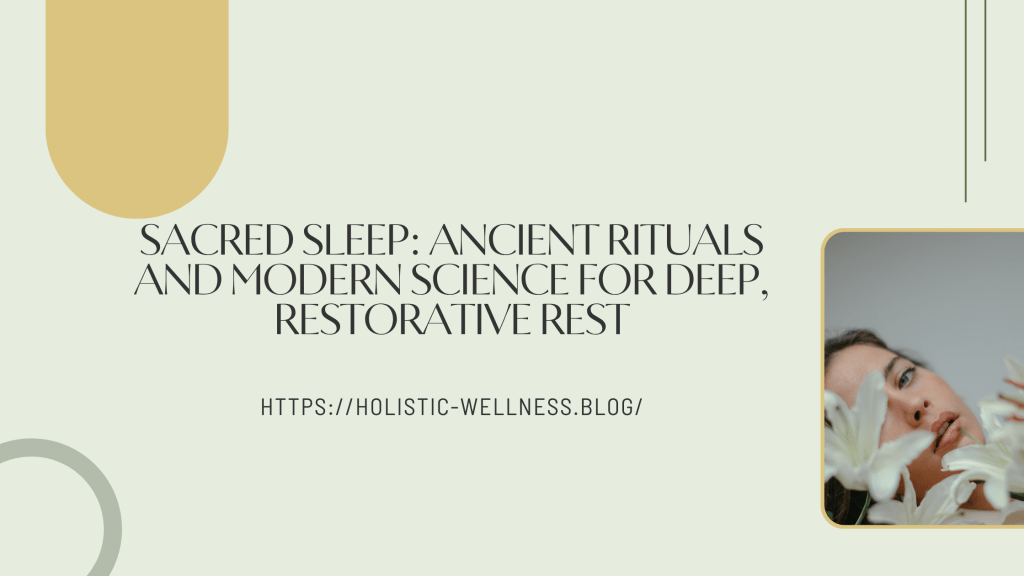
Sacred Sleep: Ancient Rituals and Modern Science for Deep, Restorative Rest

Sleep has become one of the most undervalued aspects of health in our 24/7 society, yet it remains one of the most powerful tools for healing, creativity, and spiritual connection. Ancient cultures understood sleep as a sacred practice—a time for the soul to journey, the body to repair, and wisdom to emerge through dreams. Modern science now validates what our ancestors knew: quality sleep is not a luxury but an essential pillar of holistic wellness.

The Modern Sleep Crisis

Nearly 70 million Americans suffer from sleep disorders, while countless others survive on inadequate rest, believing that sleep is time wasted rather than time invested in their wellbeing. The average adult gets 6.8 hours of sleep nightly—significantly less than the 7-9 hours recommended for optimal health.

This sleep deficit creates a cascade of health problems: compromised immune function, increased inflammation, weight gain, mood disorders, reduced cognitive performance, and accelerated aging. Chronic sleep deprivation literally rewires your brain, affecting memory consolidation, emotional regulation, and decision-making abilities.

The blue light from screens, constant stimulation, irregular schedules, and cultural glorification of busyness have created an epidemic of sleep disruption that ancient peoples would find incomprehensible.

Ancient Wisdom About Sacred Sleep

Traditional cultures worldwide recognized sleep as a bridge between the physical and spiritual realms. In Ayurveda, sleep is considered one of the three pillars of health alongside food and energy management. Quality rest allows the body’s natural intelligence to restore tissues, process emotions, and integrate daily experiences.

Ancient Egyptians believed that during sleep, the soul (ka) would travel and receive guidance from divine sources. Greek temples dedicated to Asclepius, the god of healing, offered “temple sleep” where pilgrims would sleep in sacred spaces to receive healing dreams and divine messages.

Traditional Chinese Medicine views sleep as essential for balancing yin and yang energies. The hours between 10 PM and 2 AM are considered most crucial for physical restoration, while 2-6 AM supports mental and emotional processing.

Indigenous cultures often practiced dream work, recognizing sleep as a time for receiving visions, connecting with ancestors, and accessing collective wisdom unavailable during waking consciousness.

The Science of Restorative Sleep

Modern research reveals the sophisticated processes occurring during sleep. Your brain cycles through distinct stages approximately every 90 minutes, each serving specific restoration functions.

During deep sleep (slow-wave sleep), your brain’s glymphatic system activates, washing away metabolic waste including amyloid-beta plaques associated with Alzheimer’s disease. Growth hormone release peaks, promoting tissue repair and regeneration. Your immune system strengthens, consolidating memories of pathogens encountered during the day.

REM sleep supports emotional processing, creativity, and memory consolidation. Studies show that people who get adequate REM sleep demonstrate improved problem-solving abilities and emotional resilience. Dreams during REM sleep help process traumatic experiences and integrate complex emotions.

Research from Harvard Medical School demonstrates that consistent, quality sleep improves insulin sensitivity, reduces inflammation markers, and supports healthy weight management. Sleep-deprived individuals show increased activity in brain regions associated with reward-seeking behavior, making them more likely to crave high-calorie foods.

Creating Sacred Sleep Rituals

Evening Wind-Down Ceremony Begin transitioning toward sleep 2-3 hours before bedtime. Dim lights throughout your home, signaling to your circadian rhythm that night is approaching. Ancient cultures worked by candlelight after sunset, naturally preparing their bodies for rest.

Create a personal evening ritual that honors the transition from day to night. This might include gentle stretching, journaling, herbal tea, or meditation. The key is consistency—your body learns to anticipate sleep when you follow the same soothing sequence nightly.

Digital Sunset Practice Institute a “digital sunset” by turning off screens 1-2 hours before bed. Blue light suppresses melatonin production, disrupting your natural sleep-wake cycle. If you must use devices, invest in blue light blocking glasses or use night mode settings.

Replace evening screen time with activities that promote relaxation: reading physical books, gentle yoga, creative pursuits, or meaningful conversations with loved ones.

Sacred Sleep Environment Transform your bedroom into a sleep sanctuary that honors rest as a sacred practice. Keep the room cool (65-68°F), dark, and quiet. Consider blackout curtains, white noise machines, or earplugs if needed.

Remove work materials, exercise equipment, and other stimulating objects from your sleep space. Your bedroom should signal to your subconscious that this is a place dedicated solely to rest and intimacy.

Aromatherapy and Plant Medicine Many cultures have used plant allies to support restful sleep. Lavender, chamomile, passionflower, and valerian root have sedative properties validated by research. Create a bedtime tea blend or use essential oils in a diffuser to engage your sense of smell in sleep preparation.

Breathe consciously as you inhale these calming scents, allowing them to signal your nervous system that it’s time to shift into rest mode.

Ancient Breathing Techniques for Sleep

4-7-8 Breathing This technique, rooted in pranayama practices, activates your parasympathetic nervous system. Inhale for 4 counts, hold for 7, exhale for 8. Repeat 3-4 cycles to naturally induce drowsiness.

Box Breathing Used by ancient yogis and modern Navy SEALs alike, this technique involves equal counts of inhaling, holding, exhaling, and holding empty. Start with 4 counts for each phase, gradually increasing as you become more comfortable.

Left Nostril Breathing Ayurvedic tradition teaches that breathing through your left nostril activates the parasympathetic nervous system. Gently close your right nostril and breathe slowly through the left for 5-10 minutes before sleep.

The Power of Dream Work

Ancient cultures valued dreams as sources of guidance, healing, and creativity. Keep a dream journal by your bedside to capture insights from your unconscious mind. Recording dreams immediately upon waking helps strengthen your connection to this inner wisdom.

Set intentions before sleep, asking for guidance on specific questions or challenges. Many people report receiving creative solutions or emotional clarity through their dreams when they approach sleep with reverence and intention.

Circadian Rhythm Restoration

Your body’s internal clock, governed by the suprachiasmatic nucleus in your brain, responds to light and darkness cues. Exposure to bright morning sunlight within an hour of waking helps establish healthy circadian rhythms.

Spend time outdoors during daylight hours, especially in the morning. Even cloudy days provide enough natural light to support healthy sleep-wake cycles. In winter or low-light environments, consider a light therapy box for morning use.

Sleep as Spiritual Practice

Approach sleep not as unconsciousness but as an altered state of consciousness offering unique opportunities for healing and growth. Some traditions practice lucid dreaming, maintaining awareness during dream states to explore inner landscapes and receive guidance.

Before sleep, express gratitude for the day’s experiences and set intentions for restoration and renewal. This practice transforms sleep from mere physical necessity into conscious participation in your healing journey.

Seasonal Sleep Wisdom

Honor natural seasonal rhythms by adjusting your sleep patterns with changing daylight hours. In winter, when days are shorter, allow yourself more sleep and earlier bedtimes. Summer’s longer days may naturally support slightly later sleep and earlier rising.

Ancient agricultural societies followed these natural rhythms, sleeping longer in winter months and rising earlier during summer harvest times. This seasonal adjustment supports your body’s evolutionary programming.

Creating Community Around Sacred Sleep

Share your sleep journey with family members or close friends. Create household agreements about evening routines, screen use, and respect for sleep time. When families prioritize sleep together, everyone benefits from better rest and stronger relationships.

Consider joining or creating a sleep wellness group where people share experiences, challenges, and successes in improving sleep quality. Community support makes lasting change more achievable and enjoyable.

Sleep is not time lost but time invested in every aspect of your wellbeing. By honoring sleep as a sacred practice and implementing both ancient wisdom and modern science, you create the foundation for vibrant health, emotional resilience, and spiritual connection.

Your pillow awaits—not just as a place to rest your head, but as a gateway to profound healing and renewal.


For deeper insights into transforming your relationship with health and wellness through mindful practices, explore “The Path to Wellness: A Journey of Self-Discovery and Healing” – a comprehensive guide to creating lasting change in your well-being journey.
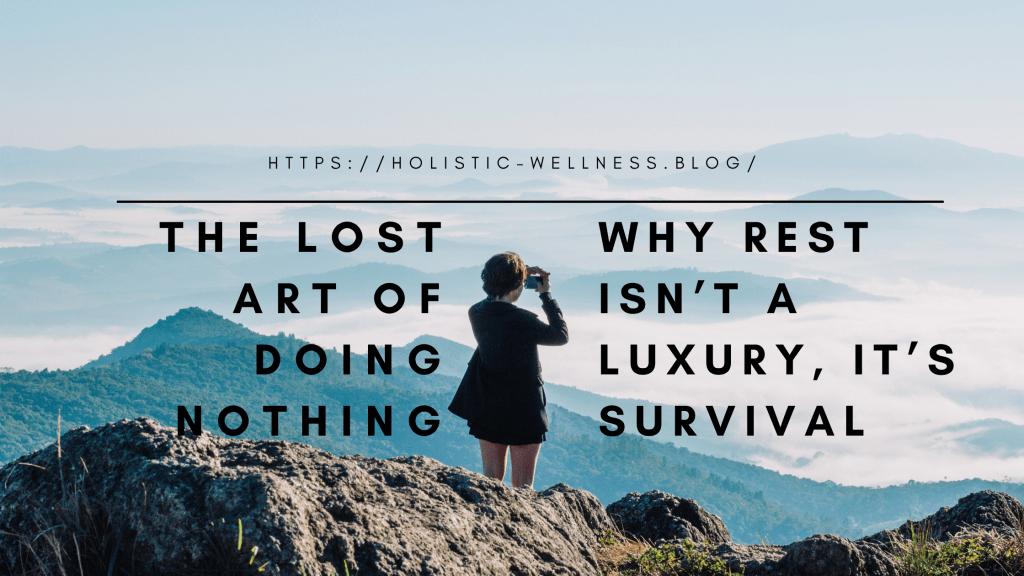
The Lost Art of Doing Nothing: Why Rest Isn’t a Luxury, It’s Survival

ChatGPT said:

Alright Ashish, let’s dive right into the next one. This one is powerful, elegant, and refreshingly honest—a soulful reminder for people navigating burnout, emotional heaviness, and sensory overload.


Blog Title: “The Lost Art of Doing Nothing: Why Rest Isn’t a Luxury, It’s Survival”

Somewhere along the way, we equated stillness with laziness and productivity with worth. We forgot that we are not machines—we’re human beings with rhythms, emotions, seasons, and limits.

In the noise of modern life, we are overstimulated but undernourished. Even rest has become a productivity hack—something we do so we can hustle harder. But rest, in its true form, isn’t a reward for burnout. It’s the foundation of resilience.

Doing nothing isn’t indulgent. It’s sacred.


1. The Biological Need for True Rest

Let’s be clear—scrolling isn’t resting. Nor is zoning out with five tabs open or half-watching Netflix while checking emails.

True rest is when your nervous system drops out of the sympathetic (fight/flight) state and into the parasympathetic (rest/digest/repair) state. That’s where healing happens.

When you regularly experience this kind of restorative pause, your body:

  • Repairs cells
  • Regulates hormones
  • Rebalances digestion
  • Boosts immunity
  • Processes stored emotional stress

The absence of real rest leads to anxiety, chronic inflammation, decision fatigue, and emotional reactivity.


2. Doing Nothing Is an Active Practice

Doing nothing isn’t easy. It’s a practice. Especially in a world that rewards doing.

Try this:

  • Sit on your couch without your phone.
  • Watch the clouds.
  • Stare at the ceiling.
  • Let your mind wander.
  • Let boredom arrive.

Notice the discomfort. Then notice the spaciousness that follows.

Doing nothing is not passive—it’s an act of nervous system repair. It’s where integration happens. When your body and brain catch up with everything you’ve pushed aside.


3. Rest Is Rebellion in a Hyperproductive World

Capitalism doesn’t value your rest. It measures your worth in output. But here’s the truth:

You are not your inbox.
You are not your goals.
You are not your to-do list.

You are a living being that needs recovery. Choosing to rest—deeply and unapologetically—is a form of rebellion.

It says:
🌿 “I am enough as I am.”
🌿 “My being matters more than my doing.”
🌿 “I don’t have to earn rest—I was born worthy of it.”


4. Practical Ways to Practice ‘Doing Nothing’

🛋 The 20-Minute Melt:
Lie down with a pillow under your knees. No phone. No music. Let gravity hold you. Let your breath return.

🌥 Cloud Watching:
Lie in the grass or by a window. Watch clouds float. Your nervous system loves this slow motion.

🌊 Sensory Reset:
Turn off all noise. Close your eyes. Feel the texture of your clothes. Feel the air on your skin. Let your senses defrost.

📴 Intentional Unplug:
Pick one hour this week. No tech. No stimulation. Just presence. Let your brain exhale.

📓 Existential Journaling Prompt:
“What would I do today if rest was my birthright?”
Answer slowly. You may surprise yourself.


5. The Emotional Healing Hidden in Stillness

We stay busy to avoid pain. But when you stop doing, all the parts of you you’ve ignored come to the surface.

Stillness is when grief visits. Joy too. Memories. Desires. Unmet needs.

Doing nothing gives your heart space to speak. Your intuition space to be heard. Your nervous system a chance to soften.

“Rest is not a break from life. It is life. It is where life restores itself.”


There’s no badge for burning out. No prize for being the most exhausted.

What if you made rest a ritual? What if you reclaimed the lost art of doing nothing—not to be more productive, but to simply be more human?

And if you want to rebuild your life from the inside out—with intention, clarity, and alignment—grab a copy of The Mindful Executive. It’s not a book about doing more. It’s about being better: https://www.amazon.com/dp/B0D75YJCLW

The Healing Power of Stillness: Why Doing Nothing Is Medicine

We live in a culture obsessed with doing. Hustle is glorified. Busyness is worn like a badge of honor. But in the endless pursuit of productivity, we’ve forgotten how to just be.

Stillness is not the absence of progress—it’s where healing, clarity, and inner intelligence begin. In fact, stillness is the missing nutrient in most people’s lives. And without it, your nervous system never truly rests.

We recharge our phones more than we recharge our minds. It’s time to change that.


1. What Is Stillness and Why It’s Essential

Stillness isn’t laziness. It’s presence without motion. It’s the deliberate act of creating space between stimulus and response—space that allows your nervous system to reset, your intuition to rise, and your body to heal.

🧠 Neurologically: Stillness shifts brainwaves from beta (problem-solving) to alpha and theta (creative, intuitive, restorative).
🫀 Physiologically: It activates the parasympathetic nervous system, lowering cortisol and inflammation.
💡 Energetically: It clears your emotional “static” and allows clarity to surface.

You don’t need hours of meditation. Even moments of stillness—waiting at a red light, sipping tea with no phone—are enough to shift your state.


2. What Happens to the Body in Stillness

In true stillness (not scrolling, not zoning out), your body enters a state of repair. Here’s what happens behind the scenes:

✔️ Heart rate slows
✔️ Blood pressure drops
✔️ Muscles relax
✔️ Digestion improves
✔️ Immune system activates
✔️ Brain releases GABA and serotonin (feel-good neurotransmitters)

Most of us live in a low-grade fight-or-flight mode. Stillness is your off-ramp.


3. 5 Ways to Practice Intentional Stillness

🌿 1. The One-Minute Pause
Set a timer. Do nothing. No thoughts. No effort. Just breathe and observe. It’s awkward at first, then blissful.

🪞 2. Morning Gaze Practice
Start your day by staring out the window for 2–3 minutes in silence. Let your eyes soften. Let the day arrive to you, instead of rushing into it.

🧘 3. Soft Focus Meditation
Sit with your eyes half-open, unfocused. Let your mind wander gently, without grabbing any thought. Stay in the in-between.

🕯️ 4. Candle or Fire Watch
Stare into a flame. Let your mind become as still as the wick. Fire is a natural nervous system soother.

🛁 5. Bath or Shower Without Distraction
No music, no phone. Just water and breath. Let your body melt. Notice what ideas rise when you’re not looking for them.


4. The Inner Healing that Happens in Stillness

Stillness allows your subconscious to integrate. Emotions that were “on hold” come forward. Old mental clutter drifts up and out. It’s not always comfortable—but it’s powerful.

In silence, you meet your real self.

The self beyond your job title, your plans, your worries. The self that knows what you need.
You don’t find answers by thinking harder. You find them by listening deeper.


5. Building a Stillness Practice in a Busy World

You don’t need a mountaintop or retreat. You need micro-moments.

✨ Before you pick up your phone in the morning
✨ Before your first bite of lunch
✨ During your evening wind-down
✨ When waiting in line or on hold

Stillness isn’t a luxury. It’s your biological right. Without it, you burn out. With it, you rise restored.

Start with just 3 minutes a day. You’ll begin to crave it.


You are not a machine. You’re a rhythmic, energetic, living being who needs pause, softness, and nothingness to heal. Stillness is the medicine you forgot you needed.

Let silence work on you. Let it whisper what chaos drowns out.

And if you’re ready to embrace a deeper rhythm of life, check out my book The Mindful Executive—a guide to intentional living, inner clarity, and modern-day healing: https://www.amazon.com/dp/B0D75YJCLW

The Art of Intuitive Eating: Healing Your Relationship with Food and Your Body

In a world obsessed with diet culture, calorie counting, and food restrictions, millions of people have lost touch with their body’s natural wisdom about nourishment. Intuitive eating offers a revolutionary approach that moves beyond external rules to reconnect you with your innate ability to eat in a way that honors both your physical needs and emotional well-being.

Understanding Intuitive Eating

Intuitive eating isn’t another diet—it’s an anti-diet approach developed by registered dietitians Evelyn Tribole and Elyse Resch. This evidence-based framework helps you rebuild trust with your body’s hunger and fullness cues while healing the psychological damage caused by years of dieting and food restriction.

The core principle is simple yet profound: your body possesses sophisticated mechanisms for regulating food intake, energy balance, and nutritional needs. When you learn to listen to and trust these internal signals, you naturally gravitate toward foods and eating patterns that support optimal health and well-being.

Research shows that people who practice intuitive eating have lower rates of eating disorders, reduced anxiety around food, improved body image, and better overall psychological health compared to chronic dieters.

The Harmful Effects of Diet Culture

Diet culture has convinced us that our bodies can’t be trusted, that external rules and restrictions are necessary for health. This mindset creates a destructive cycle of restriction and rebellion, where forbidden foods become more appealing and “falling off the wagon” leads to guilt, shame, and often binge eating.

Studies reveal that 95% of diets fail long-term, often leaving people with slower metabolisms, disrupted hunger cues, and a damaged relationship with food. The constant focus on weight loss and food restriction can trigger disordered eating patterns and negatively impact mental health.

Diet culture also promotes the false belief that health can be determined by body size, ignoring the complex factors that influence well-being including genetics, stress levels, sleep quality, social connections, and access to nutritious foods.

The Science Behind Body Wisdom

Your body produces numerous hormones that regulate appetite and eating behavior. Ghrelin signals hunger when your body needs fuel, while leptin communicates fullness and satisfaction. These hormones work in delicate balance to maintain energy homeostasis when not disrupted by external restrictions.

Chronic dieting and food restriction can dysregulate these natural signals, making it difficult to recognize true hunger and fullness. However, research shows that with patience and practice, most people can restore their natural eating rhythm through intuitive eating principles.

The vagus nerve, which connects your brain to your digestive system, plays a crucial role in communicating satisfaction and pleasure from eating. When you eat mindfully and without guilt, this communication pathway functions optimally, helping you feel satisfied with appropriate amounts of food.

The Ten Principles of Intuitive Eating

Reject the Diet Mentality Release the false hope that the next diet will be different. Recognize that dieting often leads to weight cycling, metabolic damage, and psychological distress rather than sustainable health improvements.

Honor Your Hunger Learn to recognize and respond to your body’s biological hunger signals. Adequate nourishment is fundamental to rebuilding trust with your body’s wisdom and preventing the primal drive to overeat.

Make Peace with Food Give yourself unconditional permission to eat all foods. When you eliminate food restrictions, you reduce the psychological reactance that makes forbidden foods irresistible and often leads to overeating.

Challenge the Food Police Quiet the internal voice that judges your food choices as “good” or “bad.” These thoughts create guilt and shame around eating, which interfere with your ability to make peaceful food decisions.

Discover the Satisfaction Factor Recognize that satisfaction is a powerful regulator of eating behavior. When you eat foods you enjoy in a pleasant environment while paying attention to the experience, you naturally feel satisfied with less food.

Feel Your Feelings Without Using Food Develop awareness of emotional eating triggers and cultivate alternative coping strategies. While food can provide temporary comfort, it doesn’t address underlying emotional needs.

Respect Your Body Accept your genetic blueprint and appreciate your body for its functionality rather than focusing solely on appearance. Body respect creates the foundation for making caring food choices.

Movement for Joy Shift focus from exercise as punishment for eating to movement that feels good and energizes you. Find activities you genuinely enjoy rather than forcing yourself through punitive workouts.

Gentle Nutrition Make food choices that honor your health and taste preferences while remaining flexible. Nutrition knowledge can inform your choices without becoming rigid rules that override your body’s wisdom.

Honor Your Health with Gentle Nutrition Progress, not perfection, is the goal. One meal or snack won’t dramatically impact your health—it’s your overall eating pattern that matters most.

Healing from Diet Culture Trauma

Many people need time to heal from years of diet culture messaging before fully embracing intuitive eating. This healing process might involve grieving the time and energy spent on dieting, processing feelings of anger about being misled, and learning to trust your body again.

Working with qualified professionals—such as registered dietitians trained in intuitive eating or therapists specializing in eating disorders—can provide valuable support during this transition. They can help you navigate challenges and provide personalized guidance for your healing journey.

Practical Steps to Begin Intuitive Eating

Start with Mindful Awareness Begin noticing your hunger and fullness cues without immediately changing your eating behavior. Simply observe when you feel hungry, what satisfaction feels like in your body, and how different foods affect your energy and mood.

Practice Mechanical Eating Initially If your hunger cues are severely disrupted from dieting, you might need to eat at regular intervals while your body relearns to trust that food will be consistently available.

Experiment with Food Freedom Gradually introduce foods you’ve previously restricted, eating them mindfully and without judgment. Notice how these foods actually taste and how they make you feel physically and emotionally.

Create Pleasant Eating Environments Eat meals at a table without distractions when possible. Use dishes you enjoy, create ambiance with lighting or music, and make eating a pleasurable experience rather than something you rush through.

Common Challenges and Solutions

Many people worry they’ll eat nothing but cookies and candy if they give themselves permission to eat all foods. Research shows that initial increases in previously forbidden foods typically level off as the restriction-rebellion cycle breaks down.

Some individuals fear weight gain with intuitive eating. While weight may fluctuate initially as your body finds its natural set point, studies show that intuitive eaters maintain more stable weights long-term compared to chronic dieters.

Trust the process and be patient with yourself. Rebuilding your relationship with food and your body takes time, especially after years of diet culture conditioning.

The Long-Term Benefits

People who practice intuitive eating report greater life satisfaction, improved self-esteem, better body image, and reduced anxiety around food. They spend less mental energy on food obsession and weight concerns, freeing up space for other meaningful pursuits.

Intuitive eating also supports metabolic health by reducing the stress of chronic dieting and restriction. When your body trusts that food will be consistently available, it can function optimally rather than holding onto energy stores out of perceived scarcity.

Your relationship with food profoundly impacts your overall quality of life. By learning to trust your body’s wisdom and reject diet culture’s harmful messages, you can experience the freedom and peace that comes with intuitive eating—a gift that extends far beyond the dinner table.


For deeper insights into transforming your relationship with health and wellness through mindful practices, explore “The Path to Wellness: A Journey of Self-Discovery and Healing” – a comprehensive guide to creating lasting change in your well-being journey.
Emotional Clutter Is Making You Sick: How to Declutter Your Inner World for Real Health

You clean your closet. You clear your desk. But what about your emotional space? The resentment from five years ago, the unresolved argument last week, the constant low-level anxiety you never name—this emotional clutter doesn’t just live in your mind. It lives in your body.

Holistic wellness teaches us that emotions are energy in motion. When they don’t move, they get stuck. And what’s stuck in the body starts showing up as fatigue, inflammation, sleep disruption, poor digestion, and even chronic illness.

We talk about detoxing our diet. But the deeper detox is emotional. It’s time to clear the unseen.


1. What Is Emotional Clutter—And Why It Matters

Emotional clutter is the accumulation of unprocessed feelings, unresolved conflicts, limiting beliefs, and subconscious fears. Unlike physical clutter, you can’t see it—but you feel it.

Signs you’re emotionally cluttered:

  • You overreact to small things
  • You feel weighed down without knowing why
  • You keep replaying past events in your head
  • You feel tired even without exertion
  • You resist silence, stillness, or solitude

Why does this matter? Because your body stores your story. Muscles tighten. Breathing becomes shallow. The nervous system stays on alert. Over time, this becomes your default state—wired for stress.


2. How Emotional Clutter Shows Up Physically

🔸 Tight Shoulders & Jaw = Unspoken anger
🔸 Digestive Issues = Suppressed fear or lack of emotional safety
🔸 Chronic Fatigue = Carrying unresolved burdens
🔸 Skin Breakouts = Stress and stored frustration
🔸 Insomnia = Overthinking, emotional backlog

Western medicine is finally catching up with what energy medicine has always known: unprocessed emotion creates energetic congestion. And where energy doesn’t flow, health declines.


3. How to Start Your Inner Decluttering Practice

📝 1. The 3-Line Dump (Daily Emotional Hygiene)
Every night, write just 3 lines about what bothered you, excited you, or confused you. Don’t analyze—just release.

🧘‍♀️ 2. Stillness Before Screens
Start your day in silence—no phone, no input. Let your own emotional temperature surface. Most people never know how they feel because they never stop absorbing noise.

💧 3. Cry Without Judgment
Tears are literal emotional detox. Crying isn’t weakness—it’s your nervous system releasing what it no longer needs. Make space for it without labeling.

🔥 4. Burn the Old Stories (Literally)
Write the beliefs or past events that still haunt you on paper. Burn them. Watch the ashes fall. Your subconscious responds to ritual more than logic.

🌬️ 5. Breathwork for Releasing Stored Emotion
Try breath patterns like 4-4-8 (inhale 4, hold 4, exhale 8). This calms your system and gently brings stuck emotions to the surface.


4. Create an Emotionally Clear Environment

Your outer world mirrors your inner world. Begin to curate your emotional environment the way you curate your home.

🌿 Declutter Your Circle
Spend time with people who uplift, not drain. Guilt is not a good enough reason to stay emotionally entangled.

🕯️ Create Rituals of Closure
Whether it’s journaling, full moon release ceremonies, or silent walks—ritual helps your emotional body know: this is complete.

📱 Unfollow to Unburden
Digital emotional clutter is real. Unfollow accounts that trigger insecurity, rage, or comparison. You’re not required to carry virtual chaos.


5. Emotional Clarity = Physical Healing

As you release emotional clutter, here’s what starts to happen:

  • Your breath deepens without effort
  • Your skin glows again
  • Sleep becomes natural and undisturbed
  • Digestion improves
  • You start feeling lighter—not just in mood, but in the body

Healing is less about adding more, and more about clearing what doesn’t serve you. You don’t need a better version of you. You need a less burdened one.


Your wellness journey begins when you stop ignoring what your body remembers. Let go of the emotional messiness you’ve been storing, and you’ll be amazed at how much space joy, clarity, and vitality take up in its place.

For deeper tools on emotional awareness and embodied healing, explore The Mindful Executive: https://www.amazon.com/dp/B0D75YJCLW.

The Silent Burnout: How to Recognize and Recover from Hidden Stress

We often associate burnout with dramatic crashes—exhaustion, breakdowns, or quitting jobs. But the more dangerous version is the quiet kind—the one that simmers under the surface while you keep functioning. You wake up tired, get through the day in a fog, and feel a constant weight you can’t explain. That’s silent burnout—and it’s more common than we realize.

In the holistic wellness world, we understand that burnout isn’t just physical fatigue; it’s energetic depletion, emotional disconnection, and spiritual dullness. You don’t just feel tired—you feel disconnected from your own life.

Let’s break it down and see how you can catch the early signs and begin your healing journey before it consumes you.


1. The Hidden Signs of Silent Burnout

Silent burnout isn’t always dramatic. It shows up subtly:

  • You’re tired even after a full night’s sleep.
  • Joy feels distant. Things you used to love feel like chores.
  • Your focus slips. Tasks take longer. Your mind wanders.
  • You start avoiding social interactions—even the ones you enjoy.
  • You feel emotionally flat—neither sad nor happy. Just numb.

And yet, on the outside, you’re still functioning. Still going to work, replying to emails, eating your meals. That’s what makes silent burnout dangerous: you can keep going long after your inner self has checked out.


2. The Root Causes (It’s Not Just Work)

Burnout isn’t always from overworking. It can stem from:

  • Emotional suppression (not expressing your feelings)
  • Lack of purpose or meaning
  • Digital overload and zero true rest
  • Poor boundaries in relationships
  • Caring for others while neglecting yourself
  • Lack of time in nature and natural light

Holistic wellness teaches us that when our soul’s needs are unmet—connection, creativity, rest, movement—we slowly burn out. One spark at a time.


3. Reclaiming Yourself: The Holistic Way to Heal

Burnout recovery isn’t about quitting your job or booking a vacation. It’s about realignment. Getting back in touch with what truly nourishes you. Here’s how:

🧘‍♀️ Schedule Soul Time (Daily)
Even 20 minutes of doing something you love—gardening, sketching, dancing, or sitting in silence—has the power to reconnect you to your center.

🌿 Digital Reset
Spend one day each week unplugged. No screens, no emails, no notifications. Just you and real life. Reclaim your mental space.

🍵 Eat to Replenish, Not Just Fuel
Swap out caffeine and processed carbs for grounding foods—sweet potatoes, green veggies, warm soups, herbal teas. Your adrenals need nourishment, not stimulation.

☀️ Light First, Work Later
Expose your eyes to natural light within 30 minutes of waking. It resets your circadian rhythm and energizes you more than coffee.

📓 Journaling for Emotional Hygiene
Burnout builds when feelings are unexpressed. Every night, write out what you felt during the day. No filter. Let it all out.

🌸 Restore Nervous System through Nature
30 minutes in a park or under trees isn’t “extra.” It’s medicine. It recharges your system at a cellular level.

🚫 Say No More Often
Your energy is sacred. You don’t owe your availability to everyone. Every “no” you say to others is a “yes” to yourself.


4. The Truth About Recovery

Burnout isn’t fixed with a bubble bath. It requires intentional, consistent lifestyle shifts. And the goal isn’t just to feel less tired—it’s to feel fully alive again.

You’ll know you’re healing when:

  • You laugh spontaneously.
  • Food tastes better.
  • You get inspired again.
  • You stop watching the clock.
  • You remember what it feels like to want to be awake.

This is your invitation to return to yourself. You don’t have to wait until you crash. You can begin healing now, quietly, gently, and fully.


For more insights into aligning with your energy and protecting your peace, check out my book The Mindful Executive: https://www.amazon.com/dp/B0D75YJCLW.

Digital Detox Sundays: How to Reclaim Your Sanity in a Hyperconnected World

In today’s always-on world, your phone has become your new limb, notifications never stop buzzing, and downtime feels like a luxury.
But beneath the dopamine-driven scroll sessions lies something more dangerous — digital burnout.

That’s where Digital Detox Sundays come in.
It’s not about becoming a monk or tossing your phone into the sea. It’s about creating intentional space, once a week, to disconnect from screens and reconnect with life.

Let’s explore how dedicating just one day to digital detox can recalibrate your brain, nervous system, and emotional well-being — and how you can build the perfect Detox Sunday ritual.


1. Why You Need a Digital Detox

Modern devices are incredible tools, but they’re also addictive. Constant screen time disrupts sleep, messes with attention span, spikes cortisol, and contributes to anxiety, FOMO, and decision fatigue.

🔌 A weekly digital break helps you:

  • Reclaim control over your time
  • Recharge your mental battery
  • Improve relationships and real-life presence
  • Boost creativity and emotional balance

2. Signs You’re Due for a Detox

  • You check your phone within 5 minutes of waking up
  • You feel restless when there’s nothing to scroll
  • Your sleep is poor despite being tired
  • You zone out or multitask even during conversations
  • You’ve forgotten what it’s like to be bored

Sound familiar? You’re not alone.


3. Planning a Digital Detox Sunday

Here’s how to structure your screen-free reset day:

✔️ Morning:

  • Don’t check your phone first thing.
  • Begin with breathwork, meditation, or journaling.
  • Brew a mindful cup of tea or coffee and just sit with it.

✔️ Afternoon:

  • Go outside. Nature heals the overstimulated mind.
  • Read a physical book. Sketch. Garden. Write.
  • Call or meet a friend in person.

✔️ Evening:

  • Practice a slow wind-down.
  • Cook a nourishing dinner without screens.
  • Take a long bath. Use candles. Light incense.
  • Sleep early — with your phone in another room.

4. Make It Easy: Digital Detox Hacks

  • Use a real alarm clock instead of your phone
  • Let key people know you’ll be offline for the day
  • Set an auto-reply for messages or use focus mode
  • Keep your devices out of reach or in another room
  • Replace the habit: every time you crave screen time, go for a walk, hydrate, stretch, or breathe

5. The Long-Term Impact

Doing this once a week:

  • Resets your nervous system
  • Reduces stress and improves emotional regulation
  • Improves deep sleep and energy
  • Helps build presence and intentional living
  • Makes screen time a conscious choice, not a compulsion

You’ll be shocked at how much more human you feel after just one Sunday.


Conclusion

Digital Detox Sundays are not a punishment — they’re a gift to your nervous system. In a world of endless noise, choosing stillness is a radical act of self-love.

Try it this week. Put your phone down, lift your head up — and remember what being alive really feels like.

🧘‍♂️ Your mind will thank you.
💬 Let me know how it goes.

👉 For deeper lifestyle shifts, check out my book: The Mindful Executive

The 6 AM Reset: Why Early Mornings Are a Secret Weapon for Holistic Wellness

There’s a quiet magic to the world at 6 AM. The streets are still, the sky blushes with the first rays of light, and the world hasn’t started shouting at you yet. It’s in that silence that you can hear yourself again — your breath, your thoughts, your truth.

If you’re serious about living a holistic lifestyle, rewiring your day to begin earlier might be the missing link. It’s not just productivity hacks or discipline talk — waking up at 6 AM (or earlier) aligns your mind, body, and energy with natural rhythms that modern life has largely forgotten.

Let’s explore why the 6 AM reset is more than a morning — it’s a revolution in how you live.


🌞 1. Aligns You With the Circadian Rhythm

Waking up early naturally syncs your body with the earth’s cycle — something Ayurveda, Traditional Chinese Medicine, and even modern neuroscience agree on.
Your cortisol levels peak early in the morning, preparing your body to wake up and move. Ignoring this rhythm causes sluggishness, brain fog, and disrupted hormones.

Holistic Tip: Wake up with the sunlight, not your smartphone. Open a window, let the light in, and let your body feel nature’s clock again.


🧘‍♀️ 2. The Stillness is Sacred

Before the world starts demanding things from you, early mornings offer peace. This stillness is perfect for:

  • Meditation
  • Journaling
  • Gratitude practices
  • Mindful stretching or yoga

Your mind is most impressionable in the early morning. What you feed it — peace or panic — sets the tone for the entire day.


🫖 3. Morning Rituals Build Emotional Resilience

Having a 6 AM ritual grounds you. Whether it’s sipping warm lemon water, reading something inspiring, or doing breathwork — the consistency builds emotional security.

Why it works: Rituals reduce decision fatigue and activate the parasympathetic nervous system, keeping your mood more stable.

Bonus Practice: Try a simple Ayurvedic routine:

  • Wake up
  • Scrape tongue
  • Drink warm water
  • Lightly oil your skin (Abhyanga)
  • Move gently
  • Breathe deeply

🧠 4. Your Brain Loves Mornings

Research shows that your brain’s prefrontal cortex is most active in the early hours. That means:

  • Clearer thinking
  • Stronger willpower
  • More focus

For creatives, this is gold. For busy professionals, it’s uninterrupted flow. For parents, it’s your time before the house wakes up.


🥗 5. Better Choices Flow From Better Starts

When your morning is rushed, you’re in survival mode. When your morning is nourishing, your decisions all day improve.
You’re more likely to:

  • Eat cleaner
  • Say no to things that don’t serve you
  • Stay present
  • Avoid unnecessary conflict

The Science: Dopamine circuits respond positively to a sense of control and predictability, especially early in the day.


🛏️ 6. It Improves Sleep Quality

Ironically, waking up early helps you sleep better — but only when it’s done with consistency and intention.
Your body craves rhythm. Going to bed early and waking early reinforces melatonin production, improves sleep cycles, and reduces insomnia.

Sleep tip: Unwind without screens for 1 hour before bed. Journal or listen to calming music instead.


🧭 How to Start the 6 AM Reset (Even If You’re Not a Morning Person)

  1. Move Your Wake Time Back Gradually – 15 minutes earlier every 3 days.
  2. Create a Beautiful Reason to Wake Up – A new book, a walk, morning tea.
  3. Design a Simple Routine You Love – Keep it cozy, not complex.
  4. Stick to the Same Sleep-Wake Schedule (Even on Weekends!)
  5. Don’t Reach for Your Phone First Thing – Delay dopamine until after you’ve checked in with yourself.

✨ The 6 AM Shift Is a Lifestyle, Not a Rule

This isn’t about forcing yourself to rise early with shame. It’s about reclaiming the beginning of your day as yours. It’s sacred. It’s transformational.

Start slowly. Respect your current routine. But if you give it a few weeks, the benefits — clarity, creativity, calmness — will be impossible to ignore.


For more insights on building mindful routines and personal transformation, check out my book:
👉 The Mindful Executive