
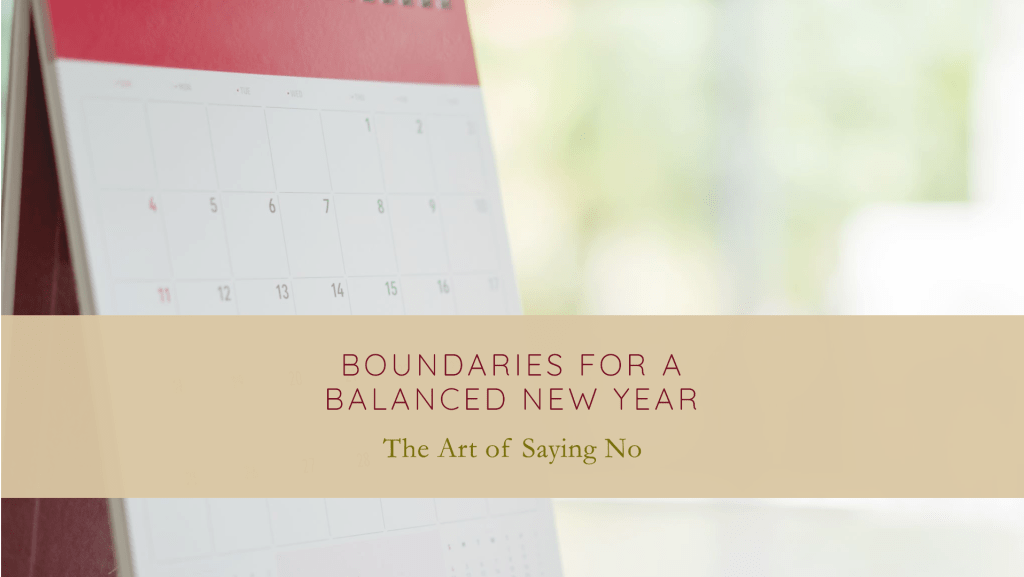
In a world that constantly demands our attention, learning to say “no” is an essential act of self-care. Setting boundaries allows you to protect your time, energy, and emotional well-being, enabling you to focus on what truly matters. As we step into the new year, embracing the art of saying no can help you cultivate a more balanced, intentional, and fulfilling life. Here’s how you can master this empowering skill and make it a cornerstone of your holistic lifestyle.
1. Redefine Your Priorities
Saying no becomes easier when you’re clear about what matters most to you. Start by identifying your core values and goals.
- How to Practice:
- Write down your top 3-5 priorities for the year (e.g., family, health, creative projects).
- Use these priorities as a guide to decide where to invest your energy.
- Pro Tip: When faced with a request, ask yourself, “Does this align with my priorities?”
2. Understand the Power of No
Saying no isn’t about rejection; it’s about respect—for yourself and others. It creates space for authenticity and ensures your commitments are meaningful.
- Why It Matters:
- A well-placed no allows you to give your best to the things that truly matter.
- It prevents burnout and resentment by avoiding overcommitment.
- Pro Tip: Reframe no as a positive boundary rather than a negative response.
3. Practice Saying No Gracefully
Turning down requests doesn’t have to feel awkward or harsh. With the right approach, you can decline gracefully while maintaining positive relationships.
- How to Practice:
- Use polite, empathetic language, such as, “Thank you for thinking of me, but I can’t commit to this right now.”
- Offer an alternative if appropriate, like suggesting someone else who might be able to help.
- Pro Tip: Practice responses in advance for common scenarios to feel more confident.
4. Set Boundaries with Yourself
Boundaries aren’t just for others—they’re also essential for managing your own habits and expectations.
- How to Practice:
- Limit your screen time, schedule regular self-care, and set clear work hours.
- Avoid overloading your schedule by building in buffer time between commitments.
- Pro Tip: Treat your personal boundaries with the same respect as professional obligations.
5. Recognize When to Say Yes
The art of saying no is also about knowing when to say yes. Accepting opportunities that align with your goals and values can be just as empowering as declining others.
- How to Practice:
- Evaluate requests based on their potential to bring joy, growth, or alignment with your priorities.
- Say yes to things that energize you and contribute positively to your life.
- Pro Tip: A clear yes often makes saying no to other things easier.
6. Use Time as a Filter
Time is a finite resource, and using it wisely means being selective about your commitments. Viewing time as valuable helps frame no as a necessary choice.
- How to Practice:
- Before agreeing to something, consider the time investment and its impact on your priorities.
- Use phrases like, “I need to check my schedule,” to buy time for thoughtful decisions.
- Pro Tip: Create a default “pause” rule—don’t commit to anything immediately.
7. Build Confidence Through Small Nos
If saying no feels uncomfortable, start with small, low-stakes situations. Over time, this practice builds your confidence and makes it easier to handle larger requests.
- How to Practice:
- Decline small favors or requests that don’t align with your priorities (e.g., “I can’t attend this meeting, but I’ll review the notes later.”).
- Notice how freeing it feels to protect your time.
- Pro Tip: Celebrate each no as a step toward empowerment.
8. Recognize and Address Guilt
Feeling guilty about saying no is common but often misplaced. Understanding that guilt is a natural response—and not an indicator of wrongdoing—helps you move past it.
- How to Practice:
- Remind yourself that saying no allows you to show up fully for your true commitments.
- Use affirmations like, “It’s okay to prioritize my well-being.”
- Pro Tip: Reflect on times you’ve said yes out of guilt and how it impacted your energy.
9. Create a Boundary Script
Having a go-to script for common scenarios makes it easier to respond without hesitation or over-explaining.
- Examples:
- “I appreciate the offer, but I’m not able to take on additional responsibilities right now.”
- “I’d love to help, but I need to focus on my current priorities.”
- Pro Tip: Keep your script simple and direct—less is often more.
10. Enforce Your Boundaries with Consistency
Boundaries are only effective if they’re upheld. Being consistent in how you enforce them sends a clear message to others and reinforces your commitment to yourself.
- How to Practice:
- Stick to your no, even if others push back. Calmly restate your position if needed.
- Recognize that you’re not responsible for others’ reactions.
- Pro Tip: Reflect on the benefits of upholding boundaries, such as increased energy and reduced stress.
Conclusion
Saying no is a skill that empowers you to lead a balanced and intentional life. By setting boundaries, you create space for the things that truly matter—your health, happiness, and growth. Remember, every no is a yes to something more meaningful. As you embrace this practice, you’ll find greater clarity, peace, and fulfillment in your daily life.
For more insights on creating balance and mindfulness in your life, check out my book, The Mindful Executive: https://www.amazon.com/dp/B0D75YJCLW.
 Holistic Wellness Guide