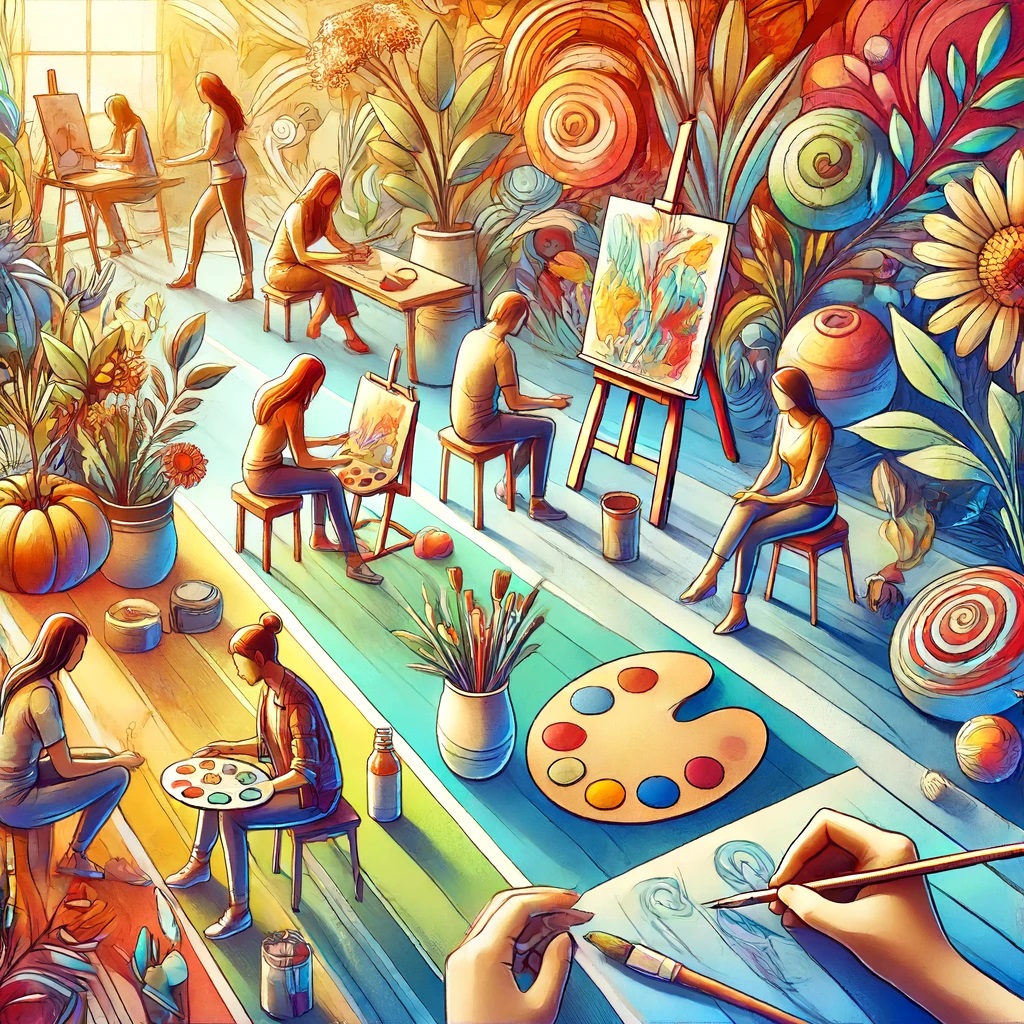
Creative expression through art has been recognized as a powerful tool for healing and personal growth. Engaging in artistic activities can provide emotional, mental, and even physical benefits, making it a valuable practice for overall well-being. Here’s how you can harness the healing power of art and creative expression to enhance your health and wellness.
1. Emotional Healing
Art allows for the expression of emotions that might be difficult to articulate with words. It provides a safe outlet to explore and release feelings.
- Example: Drawing, painting, or sculpting can help you process and express emotions such as sadness, anger, or joy. Create a piece of art that reflects your current emotional state to gain insights and find relief.
2. Stress Reduction
Engaging in creative activities can reduce stress by providing a distraction from daily pressures and fostering a state of relaxation.
- Example: Spend time coloring in an adult coloring book or creating a mandala. The repetitive nature of these activities can induce a meditative state, reducing stress and promoting calmness.
3. Mental Health Benefits
Art therapy has been shown to improve mental health by enhancing self-awareness, self-esteem, and emotional resilience.
- Example: Journaling with a combination of words and images can help you explore your thoughts and feelings, leading to greater self-awareness and emotional healing.
4. Cognitive Benefits
Creating art can enhance cognitive functions such as problem-solving, critical thinking, and memory.
- Example: Try engaging in activities like puzzle-making, drawing intricate designs, or creating collages. These tasks stimulate the brain and can improve cognitive abilities.
5. Physical Benefits
Art can also have physical benefits, particularly for those recovering from illness or injury. It can improve motor skills, hand-eye coordination, and overall physical health.
- Example: Activities like knitting, sculpting, or pottery can improve fine motor skills and hand strength. These activities also provide a sense of accomplishment and progress.
6. Social Connection
Participating in group art activities can foster a sense of community and connection with others, reducing feelings of isolation.
- Example: Join a local art class or community art group. Collaborating with others on creative projects can enhance social bonds and provide emotional support.
7. Self-Expression and Identity
Art allows you to explore and express your identity, helping you understand yourself better and fostering personal growth.
- Example: Create a self-portrait or a visual diary that reflects your experiences and identity. This practice can help you connect with your inner self and gain insights into your personal journey.
8. Healing Trauma
Art therapy can be particularly effective for healing trauma, as it provides a non-verbal outlet for processing traumatic experiences.
- Example: Work with an art therapist to create pieces that reflect your trauma and healing journey. This process can help you process and release traumatic memories in a safe and supportive environment.
9. Enhancing Creativity
Engaging in artistic activities can boost creativity and inspire new ideas in various areas of life.
- Example: Try experimenting with different art forms such as painting, digital art, or mixed media. Allow yourself to explore and take risks with your creativity.
10. Mindfulness and Presence
Creating art encourages mindfulness and being present in the moment, which can reduce anxiety and promote a sense of peace.
- Example: Practice mindful drawing or painting by focusing on the sensations of the materials, the colors, and the movements of your hands. This can help you stay grounded and connected to the present moment.
Practical Tips for Incorporating Art into Your Life
- Start Small: Begin with simple art activities that you enjoy, such as doodling or coloring. Gradually explore more complex projects as you become more comfortable.
- Example: Set aside 10-15 minutes each day to engage in a creative activity.
- Create a Dedicated Space: Set up a space in your home where you can create art without interruptions.
- Example: Use a corner of a room with a table, art supplies, and good lighting to create your art studio.
- Join a Class or Group: Look for local or online art classes and groups that align with your interests.
- Example: Enroll in a painting class at a community center or join an online art workshop.
- Use Art Supplies You Enjoy: Invest in quality art supplies that inspire you and make the creative process enjoyable.
- Example: Buy a set of high-quality colored pencils, paints, or markers to enhance your creative experience.
- Be Patient with Yourself: Remember that art is about the process, not the outcome. Allow yourself to create without judgment or pressure.
- Example: Focus on enjoying the act of creating rather than striving for perfection.
 Holistic Wellness Guide